Why Wall Panels Work in Modern UK Interiors
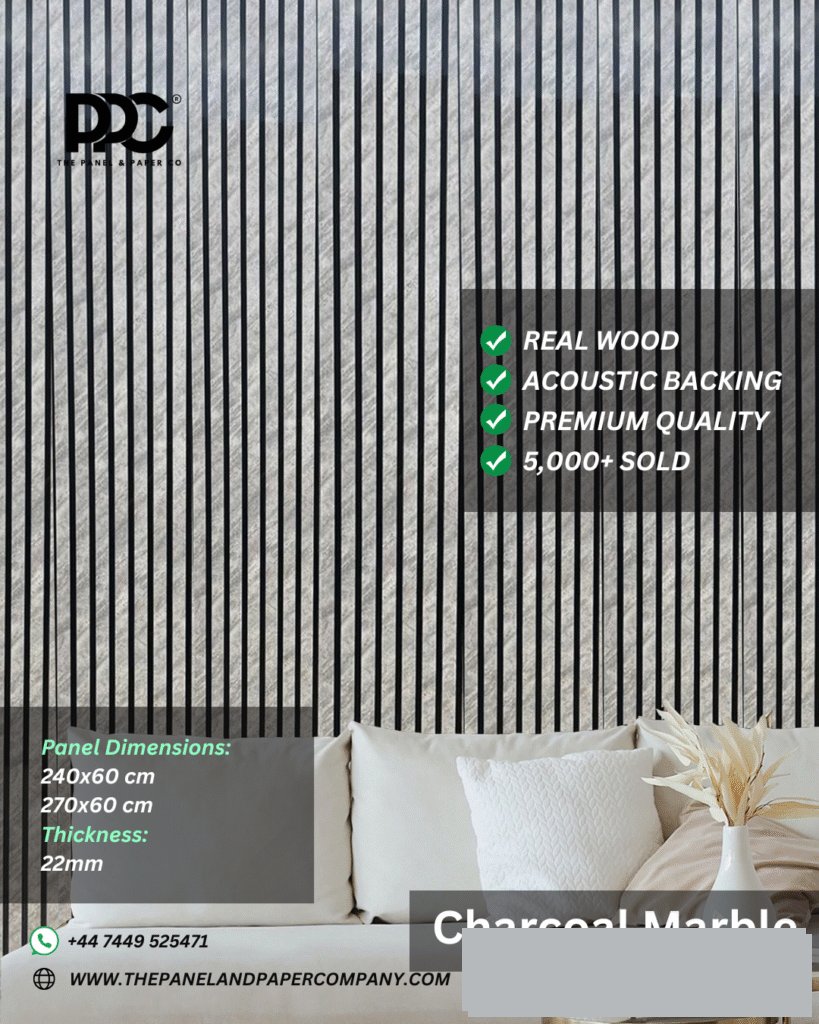
Wall panels have moved beyond short-lived decorating trends because they solve several design problems at once. They add rhythm, texture and a clear focal point while allowing a room to feel finished without relying on layers of artwork or decorative moulding. In modern UK interiors, slatted and acoustic designs are especially useful where homeowners want warmth alongside clean architectural lines.
Why wall panels continue to work
A good panel layout creates structure. Vertical slats can make a ceiling feel taller, define a media wall or turn an awkward recess into part of the scheme. Realistic timber finishes introduce natural variation, while black felt provides contrast and can help absorb some reflected sound. This is why panels appear in living rooms, bedrooms, home offices, restaurants and reception areas rather than one narrow style of property.
Acoustic wall panels are not a complete soundproofing system. Their practical acoustic role is to soften reflections within a room, which may improve speech clarity and reduce a harsh, echoing feel. Anyone trying to block neighbour noise should read our acoustic panels versus soundproofing guide before choosing a wall finish.
Modern finishes for different rooms
White Oak suits compact London flats and north-facing rooms because it keeps the palette light. Walnut introduces warmth without the visual weight of the darkest finishes. Dark Oak works particularly well around televisions and in hospitality interiors, while Grey supports cooler stone, concrete and monochrome schemes. Black creates a confident backdrop but benefits from considered lighting so the slat detail remains visible.
Colour names can vary between supply chains, so a physical sample is more reliable than a phone screen. Our wall panel colour guide explains the alternative names used for the five core finishes and how to compare them at home.
Plan the panel layout before buying
Start with the finished wall width and height, then record doors, windows, skirting, switches and sockets. Divide the usable width by the coverage width of the chosen product and round up to a whole panel. A cutting plan matters because narrow offcuts may not be useful elsewhere and wood tones can vary slightly between batches.
Use our panel quantity guide or open the wall panel calculator. Customers can also send measurements and a clear wall photograph through WhatsApp for a practical sense-check before checkout.
Installation is part of the design
Successful projects look intentional at every edge. Decide where the first and last slat will land, whether exposed ends need trims and how the pattern meets skirting or cornice. Plan LED channels and cable routes before adhesive is applied. The substrate must be dry, sound and suitable for the selected fixing method.
Our acoustic wall panel installation guide covers measuring, cutting and fixing in more detail. Use the adhesive specified for the wall and panel type, and consult a qualified electrician for new or altered fixed mains wiring.
Balance panels with the rest of the interior
Wall panels should support the furniture, lighting and circulation rather than compete with them. In a small room, keeping adjacent walls quiet allows the slatted surface to remain the focal point. In larger open-plan spaces, repeating one timber tone through shelving, a dining table or cabinet detail can make the scheme feel connected without creating an exact colour match. Curtains, rugs and upholstered furniture also influence the room acoustically, so consider the complete interior rather than expecting one surface to do every job.
Natural and artificial light can change the apparent finish throughout the day. Position samples vertically against the intended wall and view them in morning light, evening light and with the lamps normally used in the room. This simple test is particularly important for Grey, Walnut and Dark Oak, where neighbouring colours can make the veneer appear warmer or cooler.
Where panels deliver the most value
A complete room does not always need full coverage. One strong feature wall behind a bed, dining table or television can be more effective than using panels everywhere. Commercial spaces may use a broader installation to create brand consistency and improve the feel of large hard-surfaced rooms. The best result comes from matching the scale of the panel zone to the furniture and sightlines.
Browse the acoustic wall panel collection to compare current dimensions, colours and prices. Order samples when colour accuracy matters, then keep the final quantity in one batch wherever possible.
Frequently asked questions
Are wall panels still suitable for modern homes?
Yes. Their usefulness comes from texture, proportion and practical room zoning rather than a single fashion cycle.
Do acoustic wall panels soundproof a room?
No. They can reduce some reflected sound inside a room, while soundproofing requires a separate construction-based system.
Should I cover the whole wall?
Not necessarily. A measured feature section can create a stronger focal point and may be more economical.
Ready to compare products? Shop acoustic wall panels