Acoustic Wall Panels vs Soundproofing: What London Homes Need to Know
Acoustic panels and soundproofing are often discussed as if they are the same thing, but they solve different problems. Understanding that difference helps London homeowners, tenants, landlords and businesses choose the right treatment and set realistic expectations before ordering.
The short answer
Acoustic wall panels improve the sound inside a room. They help reduce echo, reverberation and harsh reflections. Soundproofing reduces sound travelling between rooms or properties. It normally requires a construction system involving mass, isolation, sealed gaps and sometimes insulation inside the wall or ceiling.
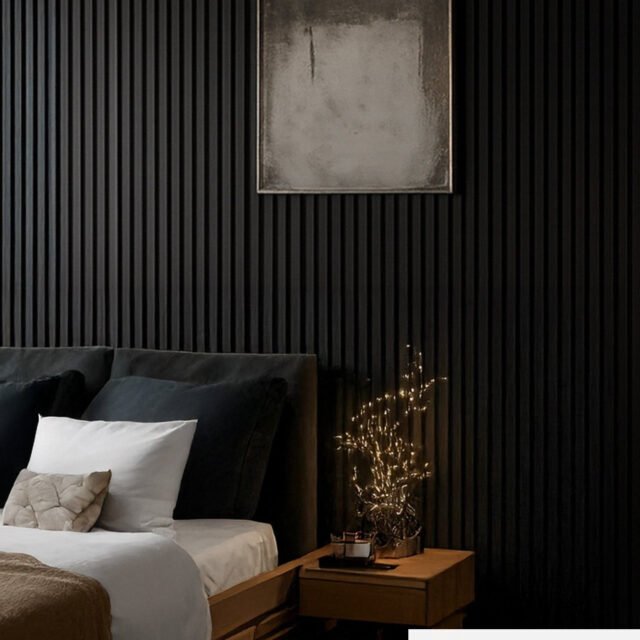
Wood slat acoustic panels are an attractive choice when you want a calmer-sounding room and a finished feature wall. They are not, on their own, a complete solution for loud neighbours, traffic noise or music passing through a party wall.
What acoustic wall panels do
Hard rooms with plaster walls, glass, tiles and wooden floors reflect sound repeatedly. That can make conversations feel tiring and television audio less clear. Acoustic backing absorbs part of that reflected energy while the slatted surface helps break up reflections.
This can be particularly useful in:
- Open-plan London flats with hard floors and large windows.
- Living rooms and media walls where speech and television clarity matter.
- Home offices used for video calls.
- Restaurants, salons, studios and reception areas.
- Bedrooms where a softer acoustic character feels more comfortable.
What full soundproofing involves
Soundproofing aims to stop airborne or impact sound crossing a building element. Effective systems may use high-density boards, isolation channels, acoustic mineral wool, resilient layers, sealed perimeters and careful treatment around sockets, doors and service gaps.
London properties vary widely. A Victorian terrace with a shared masonry wall presents a different challenge from a new-build flat with lightweight partitions. Before major work, identify whether the problem is voices, bass, footsteps, traffic or building services because each follows a different path.
Can acoustic panels help with noisy neighbours?
They may make the room itself sound less reflective, but they will not normally stop neighbour noise entering through a shared wall. If transmission is the main problem, speak to an acoustic specialist or competent installer about the wall build-up. Decorative panels can then be fitted as the visible finish over a suitable system, provided the installation design allows it.
Acoustic treatment for London home offices
For video calls and recorded speech, treating the wall behind or opposite your desk can reduce flutter echo and improve clarity. Soft furnishings, curtains and rugs can complement wall panels. The aim is usually balanced absorption rather than covering every surface.
Where should panels be placed?
Start with the largest bare reflective wall or the area closest to the main listening and speaking position. A feature wall behind a television, desk, dining area or headboard often combines visual impact with useful acoustic treatment. In larger commercial rooms, several treated zones may perform better than one small decorative strip.
How much of the wall should be covered?
There is no universal percentage because room size, ceiling height, furnishings and use all matter. For a decorative residential project, many customers cover one complete feature wall. For a performance-led room, an acoustic assessment is the best way to specify coverage.
Use our panel cost calculator to estimate a wall quantity, or read our guide on how many acoustic wall panels you need.
Choosing panels for design and comfort
Our acoustic wall panel range includes light, mid-tone and dark wood finishes for homes and businesses across London and surrounding areas. Select the finish in natural daylight where possible and check measurements before ordering.
Frequently asked questions
Do acoustic wall panels block noise from neighbours?
Decorative acoustic panels mainly reduce reflections inside a room. Blocking noise through a shared wall normally requires a separate construction-based soundproofing system.
What problem do acoustic panels solve?
They can reduce echo and reverberation by absorbing some reflected sound, which can make speech, television and music feel clearer inside the room.
Can acoustic panels be part of a soundproof wall?
They can be the visible finish, but the wall build-up behind them must provide the mass, isolation and sealing needed to reduce sound transmission.
Ready to compare products? Shop acoustic wall panels