Are Acoustic Wall Panels Suitable for Bedrooms?
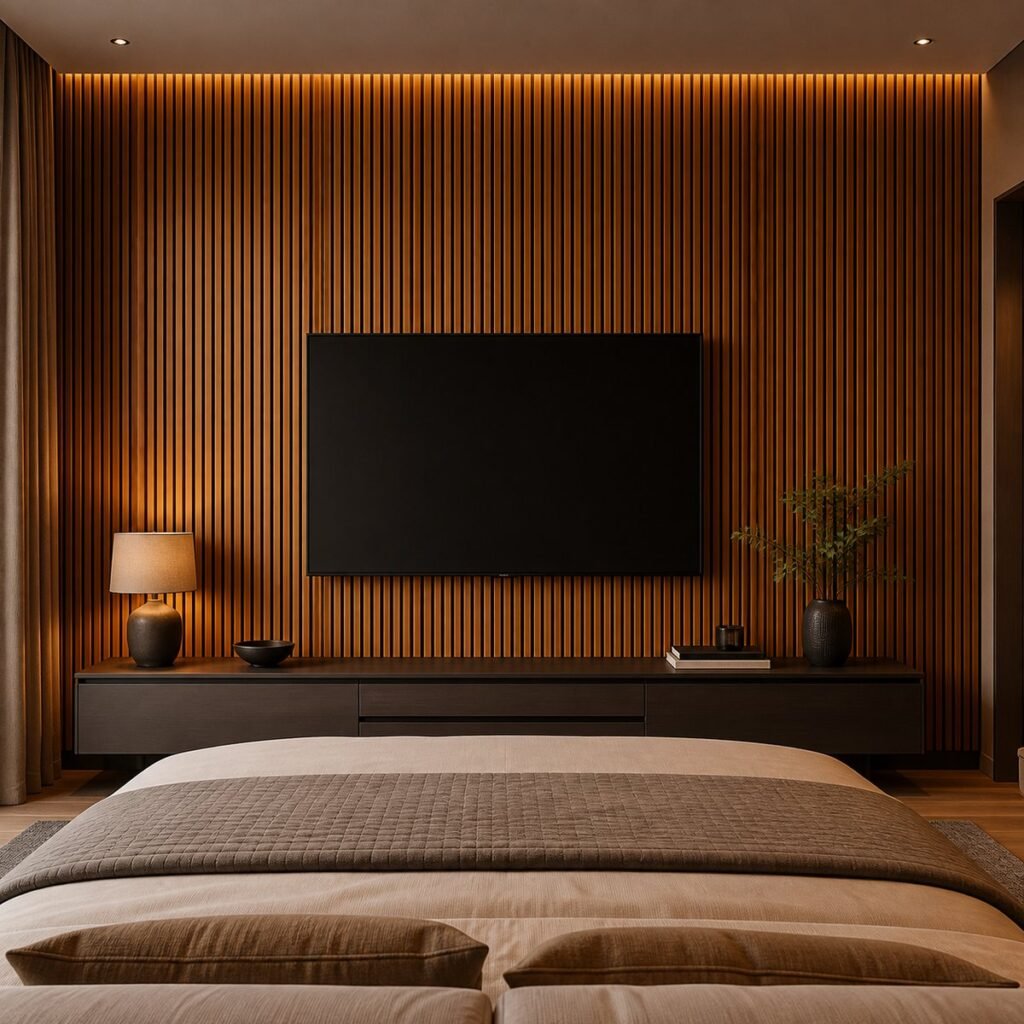
Acoustic wall panels can work very well in bedrooms when the aim is to combine a decorative feature wall with some control of sound reflections inside the room. They add vertical texture, can make a plain wall feel more considered and may soften the hard, echoing character of rooms with limited soft furnishings.
They are not, however, a complete soundproofing system. A slatted panel fitted to one wall cannot be expected to stop traffic, neighbours or footsteps travelling through the building structure. The best bedroom installation begins with a clear design goal and an honest understanding of the acoustic goal.
This guide explains where bedroom panels work best, how to choose a finish and what London homeowners and renters should check before ordering.
Why Use Acoustic Wall Panels in a Bedroom?
Bedrooms contain more soft material than kitchens or hallways, so they are not always the most echo-prone rooms. Curtains, carpet, bedding and upholstered furniture already absorb some sound. A panel wall can still be useful where there are large bare surfaces, laminate floors, minimal furniture or an open route into a dressing area.
The main reasons customers choose them are:
- to create a feature wall behind the bed;
- to add warmth and texture without patterned wallpaper;
- to visually frame a bed or dressing table;
- to reduce some high-frequency reflections within the room;
- to support a calmer television or music-listening area; and
- to coordinate the bedroom with panelled spaces elsewhere in the home.
The decorative result is immediate. The acoustic change depends on the room, panel construction, coverage and installation method.
Acoustic Treatment Is Not the Same as Soundproofing
This distinction is essential for bedrooms. Acoustic treatment changes how sound behaves inside a room. Soundproofing aims to reduce sound passing from one room or property to another.
Slatted acoustic panels may help reduce flutter echo and harsh reflections, particularly when a room has hard walls and floors. They do not normally seal the paths through which external noise enters, such as:
- gaps around doors and windows;
- lightweight partitions;
- shared floors and ceilings;
- ventilation openings;
- pipe penetrations; and
- structural connections between adjoining homes.
If sleep is being disturbed by outside or neighbour noise, identify the transmission path before buying a decorative panel. The detailed guide to acoustic panels versus soundproofing explains the difference and helps set a realistic plan.
Is Behind the Bed the Best Position?
Behind the bed is the most common bedroom location because the wall already acts as a visual focal point. Full-height slats can make the ceiling appear taller, while a panelled zone slightly wider than the bed can create a deliberate headboard effect.
This position works especially well when:
- the bed is centred on a plain wall;
- bedside tables and lights can be aligned with the slats;
- electrical outlets remain accessible;
- the wall has enough uninterrupted width; and
- the chosen finish complements the floor and bed frame.
Measure around sockets, switches, radiators, picture rails and skirting before deciding on the layout. Do not assume that a wall is square, particularly in period London properties.
Use the awkward-wall measuring guide where the bedroom includes alcoves, sloping ceilings or chimney-breast returns.
Full Wall or Partial Feature?
A full wall gives the strongest architectural effect. It also increases material coverage, which may provide more useful absorption than a very narrow decorative strip. The trade-off is cost, fitting time and visual weight.
A partial feature can be better when:
- the bedroom is compact;
- the selected finish is very dark;
- the bed is positioned in an alcove;
- the tenant needs a reversible design;
- only one section of damaged wall needs to be disguised; or
- the room already contains several strong textures.
Possible partial layouts include a bed-width section, a floor-to-ceiling strip beside a dressing table or a panelled recess. Keep the boundaries intentional. A panel section ending a few centimetres from a socket or furniture edge can look accidental.
Choosing a Finish for a Bedroom
Colour and grain should be tested in the actual room. Bedrooms are often viewed under warm bedside lamps, which can make pale panels look creamier and deepen brown tones.
Walnut
Walnut introduces warmth and works naturally with cream, beige, olive, navy and black furniture. In a small north-facing bedroom, test it carefully so the wall does not become visually heavy.
Dark Oak
Dark oak creates a more dramatic backdrop and can suit hotel-inspired rooms or media walls. Balance it with lighter bedding, adequate lighting and a clear surrounding wall colour.
Grey
Grey can work with contemporary interiors, upholstered beds and cool-neutral flooring. Check the sample beside the permanent furnishings because grey finishes can shift warmer or cooler under different lamps.
Black
Black or charcoal panels produce strong contrast and can frame a television or bed effectively. They usually benefit from deliberate lighting and lighter adjacent surfaces.
White Oak and Pale Finishes
Pale finishes can make a compact room feel lighter and allow the slat texture to remain visible without dominating the space. Compare the undertone with the floor, wardrobes and wall paint rather than relying on the colour name.
The site’s panel sample comparison guide should be live before this article is published. Test the shortlist in morning daylight, evening light and beside the bedding that will remain in the room.
Lighting Changes the Panel Colour
Warm bedside lamps can enrich walnut and dark oak, while cooler ceiling lights can make grey and pale panels appear cleaner. If LED strips will be fitted between the slats, decide their position and colour temperature before bonding the panels.
Avoid a strip that shines directly into the eyes from the normal sleeping position. Reflections in mirrors, televisions and glossy wardrobes should also be checked.
A useful bedroom test is to temporarily hold the sample at headboard height, switch on only the lamps used at night and view it from the doorway and the bed. That is more informative than examining the sample under a bright shop or phone light.
Will the Panels Collect Dust?
Like shelves, radiators and fabric headboards, slatted panels need occasional cleaning. Dust can settle on horizontal edges, inside deeper grooves or near heating vents.
For routine care:
- use a soft brush attachment or microfibre duster;
- work gently along the slat direction;
- avoid soaking the wood or backing;
- test any cleaning product on an inconspicuous area; and
- follow the product-specific care instructions.
Bedrooms used by people with sensitivities should be kept well ventilated and cleaned as part of the normal room routine. Do not make medical or allergy-control assumptions based only on the word “acoustic”.
The scheduled cleaning and maintenance guide provides a fuller routine once published.
Installation Checks for Bedroom Walls
Before fitting, identify the wall construction and any concealed services. Bedrooms may have sockets near bedside tables, wall-mounted reading lights or cables routed behind a television.
Check:
- whether the wall is masonry, plasterboard or another substrate;
- whether it is dry, sound and reasonably level;
- the location of electrical cables and pipework;
- how skirting, coving and picture rails affect the height;
- whether adhesive or mechanical fixings are suitable; and
- whether the product instructions require a particular method.
Do not cover a damp wall or use decorative panels to conceal an unresolved leak. Where wiring must be moved or a new electrical connection is required, use an appropriately qualified installer.
For a cleaner cut around sockets and edges, measure twice and work from the visible face specified by the product instructions. Tracker item 7 contains a separate practical guide to cutting acoustic panels and should be linked after it is published.
What Renters Should Consider
Tenants need the property owner’s permission before making permanent changes. Adhesive can damage paint and plaster when removed, while screws create fixing holes.
Possible renter approaches include:
- asking for written approval for a permanent improvement;
- using a removable secondary frame where structurally appropriate;
- panelling a freestanding furniture feature rather than the property wall; or
- choosing samples and planning the layout for a future property.
Never rely on a social-media “damage-free” claim without checking the product, wall finish and tenancy terms. Read the guide to installing acoustic wall panels in a rented London home before proceeding.
How Much of the Wall Should Be Covered?
For decorative purposes, coverage is a design choice. For acoustic purposes, a larger treated area generally has more potential influence than one narrow strip, but exact room performance cannot be promised from wall area alone.
Measure the actual width and height of the intended section, subtracting only openings that will genuinely remain uncovered. Then calculate using the current product dimensions and add an allowance for cuts or mistakes appropriate to the layout.
Do not calculate from an old product image. Confirm the live dimensions and whether the item is sold as a single panel or a pack.
Browse the current acoustic wall panel collection and use the site’s panel calculator for an initial quantity. Ask for confirmation where the wall includes several returns or unusual cuts.
Frequently Asked Questions
Do acoustic wall panels make a bedroom soundproof?
No. They can help manage some reflections inside the bedroom, but soundproofing requires attention to the construction and routes through which noise travels.
Can acoustic panels be fitted behind a bed?
Yes, provided the wall, fittings and installation method are suitable. Behind the bed is a popular position because it creates a clear feature wall.
Are dark acoustic panels suitable for a small bedroom?
They can be, but lighting and surrounding colours matter. A full dark wall may feel heavier than a partial feature, so test a sample in the room first.
Can tenants install bedroom wall panels?
Only with the required permission. Adhesive and mechanical fixings can alter the wall, so renters should obtain written approval and understand reinstatement requirements.
Are acoustic wall panels difficult to clean in a bedroom?
Routine dusting with a soft tool is usually manageable. Follow the current care guidance for the panel finish and avoid saturating the material.
A Good Bedroom Panel Plan
Acoustic wall panels are suitable for many bedrooms when they are chosen as a decorative surface with realistic acoustic benefits. The strongest results come from a measured layout, a finish checked under bedroom lighting and an installation that respects the wall, services and tenancy conditions.
Start with the intended wall and a current sample. Decide whether the priority is a full feature, a bed-width section or an acoustic improvement inside a hard-surfaced room. Then confirm the current product size, quantity and fitting method before ordering.
If the bedroom has an unusual layout, send clear wall measurements and photographs through the site’s WhatsApp contact for product and quantity guidance.