PVC Wall Panels in Wimbledon: Budget a Room in Sensible Stages
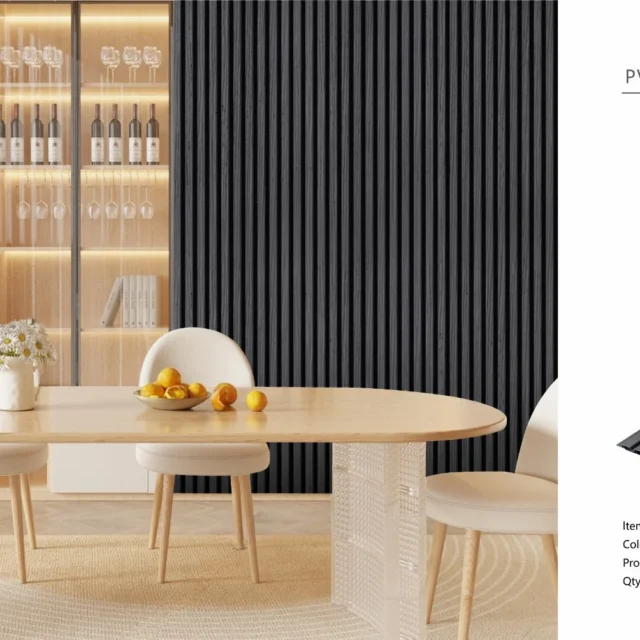
A phased project can make a room refurbishment easier to organise, but buying the same number of packs twice is not automatically the cheapest route. When planning PVC wall panels in Wimbledon, compare the complete material schedule with the purchase stages you have in mind. Whole-pack rounding, usable offcuts and finish continuity can matter as much as the area of the walls.
The current range includes White Oak, Grey, Walnut, Dark Oak and Black. Each eight-piece pack costs £140; the individual panels measure 240cm by 30cm. Together they represent 5.76m² of nominal material area. The panels are sold in whole packs, so the arithmetic equivalent of £17.50 a piece does not mean individual pieces can be bought at that price.
Set the project boundary before setting a budget
Write one sentence describing the project scope. For example: cover the main feature wall first, then add a smaller second wall after the furniture has been replaced. Identify the surfaces that are excluded as well. This prevents a modest panel purchase from quietly expanding to include repairs, lighting and several other finishes without a revised room budget.
Put the room measurements on a floor plan and label each wall with a letter. Record width, intended finished height, openings and any returns. A photograph can explain appearance, but a labelled drawing makes it possible to trace every quantity back to a surface. Keep the same labels on the quotation and any later purchase order.
Decide whether the same colour must continue across both stages. If adjacent surfaces need a close match, raise batch consistency before the first purchase. Stock availability, a future production batch and a repeat order price should all be confirmed at the relevant time rather than assumed.
Use two calculations: pieces first, then packs
For a simple vertical arrangement, divide the wall width by the confirmed effective width of a fitted panel and round up to a whole piece. Check that the supplied length accommodates the finished height and the required cuts. Repeat for every separately covered surface before converting the total panel count into packs.
Pack rounding happens after this layout work. Divide the required pieces by eight and round up to the next whole pack. This gives a purchasing quantity for the stated arrangement, subject to the agreed cutting waste and spare material. A square-metre estimate remains useful as a cross-check, but it cannot describe every joint, return or offcut.
Do not substitute the physical width for the fitted width without confirmation. A joining detail can change useful coverage. Where the wall height exceeds 240cm or the intended direction differs from a straightforward vertical layout, obtain a specific arrangement and quantity check before placing the order.
A two-stage example shows where costs change
Suppose an initial wall is 3.00m wide and 2.20m high, and a later wall is 1.50m wide at the same height. If the effective width has been confirmed at 0.30m, the first stage uses ten full-height pieces and the second uses five. This simplified example allows no additional spare or rejected cuts and must be reviewed against the actual installation.
| Buying approach | Illustrative purchase | Panel cost |
|---|---|---|
| Calculate each stage without considering retained stock | Two packs for ten pieces, then another pack for five | £420 |
| Plan both surfaces and reserve the unused full lengths | Two packs supply sixteen pieces; fifteen are allocated across the two stages | £280 |
The £140 difference comes from using already purchased lengths, not from a discount or a change in the product price. The comparison only works if those retained pieces remain suitable, undamaged and available for the later wall. A practical cutting allowance or revised dimensions could change the outcome.
The first ten pieces are each shortened by 20cm in this example. Those short remnants are not substitutes for the five full-height pieces needed later. Record usable offcuts by dimension and planned purpose. Treating every remnant as equivalent spare material can make a spreadsheet look efficient while leaving the installation short.
Build a complete cost sheet
Put panels on their own line, then identify the other purchases or services required for the approved scheme. Request an actual figure or mark an item to be quoted. Zero is only appropriate when a cost is confirmed as unnecessary or included elsewhere.
- Surface repairs: work needed before the decorative finish can be installed.
- Adhesive quantity: calculated from the approved product instructions and wall condition.
- Finishing components: compatible edges, junction details and any necessary accessories.
- Installation labour: a separate quotation based on the agreed layout and preparation.
- Tool hire: only where it forms part of the chosen installation plan.
- Delivery cost: the confirmed charge for the postcode and service requested.
- Contingency allowance: your chosen reserve for identified uncertainty, recorded separately from committed spend.
This structure lets you compare a written quotation with your own budget without confusing a material-only price with a fitted-room price. Ask which items are included, what has been excluded and how changes will be priced. Do not add an invented standard installation rate to the pack cost.
Choose the finish before committing the shared stock
The White Oak product page and Walnut product page offer two starting points for comparison. Grey, Dark Oak and Black complete the current selection. Assess the finish against the furniture and paint that will be present at the end of the whole project, rather than only against the room’s temporary first-stage appearance.
Record the exact colour reference and product link after layout approval. If a matching sample is needed, enquire about availability for this PVC range. Reusing a familiar finish name from another material does not establish that it will look the same. Keep finish decisions separate from technical suitability, which depends on the precise product and proposed assembly.
Protect the later stage from avoidable surprises
If you buy material in advance, ask for the supplier’s storage conditions and handling guidance. Identify a place where the packs can remain protected while other work continues. Label reserved lengths for the second wall and retain the order confirmation, packaging reference and any supplied fitting documents together.
If you prefer to buy later, request current availability and pricing again before scheduling that stage. There is a trade-off between committing cash flow early and relying on future stock. Neither approach guarantees colour continuity unless the supplier has specifically confirmed the arrangement. Include any agreed reservation terms in the written record.
Keep the current price, ordered quantity and unspent budget visible on the cost sheet. After a change, update total spend rather than carrying forward an obsolete estimate. A single revised sheet is easier to use than several messages containing different pack totals.
Arrange receiving separately from installation
For Wimbledon addresses, Merton explains the difference between loading and unloading vehicles and other parking activity. Loading restrictions and local signs must be checked for the precise place and time. A permitted unloading activity does not automatically settle an installer’s parking arrangements for the rest of the job.
Give the supplier the full address and ask about the available delivery date and charge. If considering a collection option, confirm the current arrangements before travelling. Build the work programme around confirmed information, with someone available to receive and check the material.
Keep a short record for each purchase stage
Before payment, retain four items: the approved wall drawing, the selected product reference, the checked pack calculation and the itemised quotation. After receipt, add any supplied batch information and note which lengths are allocated to each surface. These become your reorder details if the design changes.
Browse the current PVC packs for live choices and use the PVC wall panel guide when comparing materials. An organised purchasing record makes the next stage a continuation of an agreed plan rather than a fresh guess at what the room needs.