Are Acoustic Wall Panels Suitable for Dining Rooms? London Guide
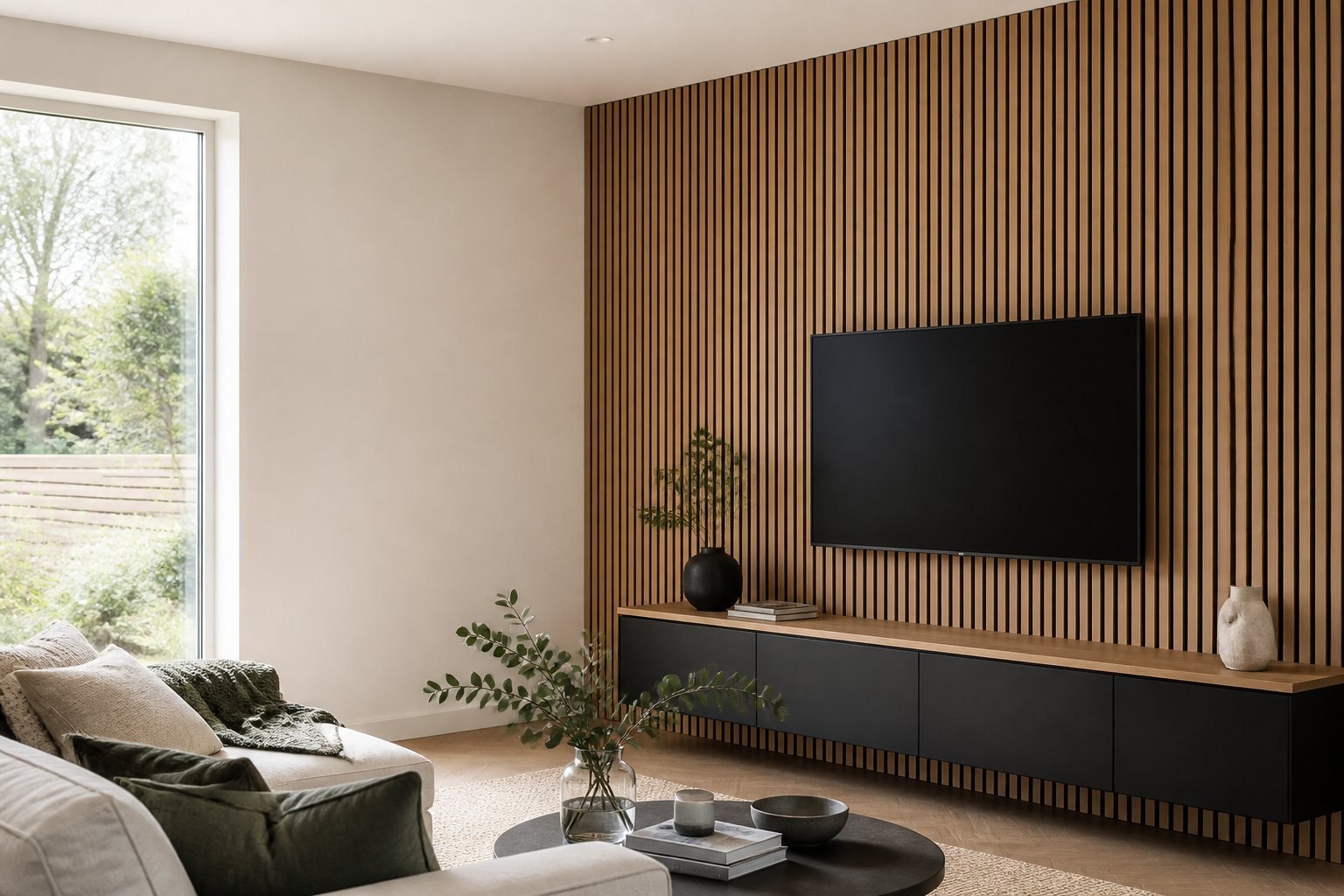
Yes, acoustic wall panels can work very well in a dining room when the aim is to make the space feel warmer, softer and more finished rather than simply louder or quieter. In many London homes, the dining area sits beside a kitchen, open-plan living space or hallway, so hard surfaces can make the room sound a little sharp. Wood slat acoustic panels are often chosen because they add texture and visual structure while helping the room feel less echoey.
The right setup depends on the wall shape, table position, natural light and how formal or relaxed you want the room to feel. A full feature wall can suit a dedicated dining room, while a narrower panel section often works better in flats, eat-in kitchens and open-plan layouts. If you are still comparing finishes, start with the acoustic wall panel collection and keep the wall measurements nearby.
What makes acoustic wall panels a good fit for dining rooms?
Dining rooms usually contain a lot of hard materials: painted plaster, glass, timber flooring, stone worktops, mirrors and large tables. That can make conversation feel a little more reflective than it does in a softer room. Acoustic wall panels are popular here because they solve two buyer concerns at the same time: they improve the look of a plain wall and they can help the room feel less harsh when family or guests are gathered around the table.
They also suit several common London layouts:
- A separate dining room that needs a focal wall behind the table or sideboard.
- An open-plan kitchen diner where one wall needs clearer visual zoning.
- A small dining corner that feels cold or unfinished without texture.
- A breakfast or banquette area that needs a more deliberate backdrop.
If your main goal is to stop outside noise or sound travelling between rooms, read our guide to acoustic panels vs soundproofing first. Decorative acoustic panels and full soundproofing are not the same thing, and it is better to be clear about that before ordering.
Where should panels go in a dining room?
Behind the table
This is usually the easiest and most balanced position. A panelled wall behind the table creates a strong backdrop in photographs, frames pendant lighting nicely and keeps the finish away from the busiest circulation routes. In Victorian and Edwardian London homes, this can also make a slightly awkward wall feel more intentional without adding bulky furniture.
On one side wall
A side wall can work well when the dining table sits under a window, in a bay arrangement or in an open-plan space where the rear wall is broken up by doors or shelving. This approach is often practical in flats where only one uninterrupted wall is available.
As a smaller feature section
You do not have to panel the full room. A centred section behind a round table, banquette or sideboard can look cleaner and be easier to plan around sockets, art and lighting. This is often the safer choice in narrower London dining rooms where a full dark wall may feel too heavy.
How to choose the right finish for a dining space
Dining rooms usually look best when the panel colour supports the table, flooring and light levels instead of competing with them. The most practical way to decide is to compare the finish at breakfast, late afternoon and under evening lighting before committing to a full wall.
- Lighter oak-style finishes can help a compact dining room feel brighter and less enclosed.
- Walnut and darker timber looks can add warmth and suit richer schemes, especially with black metal lighting or darker furniture.
- Grey or smoked tones can work in more contemporary spaces if the room already has enough daylight.
- Bold dark finishes can be effective in a dining room, but they usually look better when balanced with lighter walls, a pale ceiling or reflective surfaces.
If you are undecided, order samples before buying the full quantity. Our guides on comparing acoustic panel samples and choosing acoustic wall panel colours are useful starting points.
What should you check before ordering?
Measure the usable wall rather than the full room. In dining rooms, buyers often forget to subtract sideboards, radiators, picture rails, wall lights, switches or chimney breast returns. Mark the table centre line and any pendant light position first, then decide whether the panel layout should run full width or stay centred to the furniture.
Before placing the order, check:
- The clear wall width and height in more than one place.
- Whether there are sockets, switches, radiators or alcoves within the panel area.
- How the panel colour looks in daylight and evening lighting.
- Whether a full wall or a narrower section suits the room better.
- Whether you need a quick quantity estimate from the panel cost calculator.
If the wall is awkward or the dining area is part of a kitchen diner, it is sensible to send measurements and a photograph through the contact page before buying. That is usually quicker than guessing and ordering around an uncertain layout.
Are acoustic wall panels practical in a dining room?
In most homes, yes. A dining room is not usually as humid as a bathroom and not as exposed to cooking splashes as the wall directly behind a hob. The main practical issue is everyday living: chairs brushing the wall, occasional food marks, and the need to keep the finish looking tidy when guests are over.
For that reason, panels are often easiest to manage on a wall that is close to the dining area but not constantly hit by chair backs. If the table sits very close to the wall, leave enough room for normal use and cleaning. A wipeable lower paint finish or a sideboard in front of part of the wall can also help protect the area that gets the most contact.
Maintenance is straightforward when you keep on top of dust and deal with marks carefully. For day-to-day care, use the same sensible approach covered in our cleaning and maintenance guide.
When are dining-room panels most worth it?
They tend to make the biggest difference when the dining area currently feels plain, echoey or disconnected from the rest of the home. That is especially common in new-build kitchen diners, converted reception rooms and compact London homes where the table area needs stronger definition without major building work.
Panels are often worth considering if you want to:
- Make a dining room feel warmer without filling it with extra furniture.
- Create a smarter backdrop for a table, sideboard or bench seating.
- Give an open-plan space clearer zoning.
- Introduce vertical texture that still feels tidy and contemporary.
If that sounds close to your project, shortlist a few finishes, compare samples in the room and then calculate quantities before ordering.
Dining room acoustic wall panel FAQs
Do acoustic wall panels make a dining room look smaller?
Not necessarily. A narrower feature section or a lighter timber finish can still add depth without making the room feel closed in. The effect depends more on colour, wall width and lighting than on the idea of panelling itself.
Should I panel the whole dining room wall or just part of it?
Either can work. A full wall suits larger or more formal dining rooms, while a centred section is often better in smaller London homes or open-plan spaces where the wall is shared with other functions.
Can I use acoustic wall panels in a kitchen diner?
Yes, many buyers use them in kitchen-dining spaces, but the exact wall position matters. It is usually wiser to place them away from the areas that receive the most direct cooking splashes and heat.
What is the safest first step if I am unsure?
Order samples, measure the usable wall and use the panel calculator before buying the full quantity. If the layout is awkward, send the measurements and a wall photo for advice first.
Ready to compare products? Shop waterproof marble wall sheets Shop acoustic wall panels