Workplace Noise Regulations in the UK: What Employers Must Do
In Great Britain, workplace noise is governed by the Control of Noise at Work Regulations 2005. They set two action values (80 and 85 dB(A) daily or weekly exposure) and a hard exposure limit of 87 dB(A). Employers must assess the risk, reduce noise at source, provide hearing protection where it is needed and keep exposure below the limit. This guide sets out what that means in practice, for a factory floor, a building site, a restaurant kitchen or an open-plan office.
TL;DR
- The lower action value is 80 dB(A), the upper action value is 85 dB(A) and the exposure limit is 87 dB(A), each measured as daily or weekly exposure, with separate peak limits in dB©.
- Employers must assess noise risk, control it at source where reasonably practicable and treat hearing protection as the supplementary measure, not the first answer.
- At the upper action value, protectors must be worn, zones marked and a control programme put in place. Health surveillance applies where the assessment shows a risk to health.
- If the 87 dB(A) limit is exceeded, exposure must be cut straight away and the cause found and fixed.
- Rooms that are merely loud or echoey, such as offices and restaurants, are a comfort and speech-clarity issue that good acoustic design can improve.
Table of Contents
- The numbers that matter: action values and exposure limits
- What is the safe noise limit for an eight-hour day?
- Is your workplace loud enough to matter?
- Step one: the noise risk assessment
- Step two: reduce noise at source
- Step three: hearing protection and hearing-protection zones
- Step four: information, training and health surveillance
- What if exposure reaches 87 dB(A)?
- Where acoustic treatment fits
- Our perspective
- A practical checklist for employers
- FAQ
- Sources
The numbers that matter: action values and exposure limits
The regulations use two measures. One is daily or weekly personal exposure, an average of the noise a worker receives over a working day or week, expressed in dB(A). The other is peak sound pressure, the loudest instant of impact or explosive noise, expressed in dB©. According to HSE’s guidance on employers’ legal duties, the values are as follows.
| Level | Daily or weekly exposure | Peak sound pressure |
|---|---|---|
| Lower exposure action value | 80 dB(A) | 135 dB© |
| Upper exposure action value | 85 dB(A) | 137 dB© |
| Exposure limit value | 87 dB(A) | 140 dB© |
Two points catch people out. First, the exposure limit is not a target and cannot be traded off against anything else. Second, the 87 dB(A) limit is assessed after taking account of the protection that hearing protectors give, as the HSE brief guide to controlling noise risks explains. The action values are assessed without that allowance, which is why they trigger duties earlier.
These rules apply in Great Britain. Northern Ireland has its own regulator, the Health and Safety Executive for Northern Ireland, though the approach to hearing checks is similar.
What is the safe noise limit for an eight-hour day?
There is no single “safe” decibel figure for a shift, because the law looks at exposure over time rather than a one-off reading. HSE’s guide Controlling noise at work (L108) says that a steady 80 dB(A) for eight hours reaches the lower action value. Louder noise reaches the same exposure faster, so a short burst of very loud work can matter as much as a long period of moderately loud work.
That is why a spot reading on a phone app does not settle the question. A proper assessment looks at how long each person is near each source across their day or week.
Is your workplace loud enough to matter?
HSE’s construction guidance gives a practical rule of thumb. A problem is likely where people have to raise their voices to be heard at about 2 metres, use noisy powered tools or machinery for more than 30 minutes a day, or work around regular impact or explosive noise.
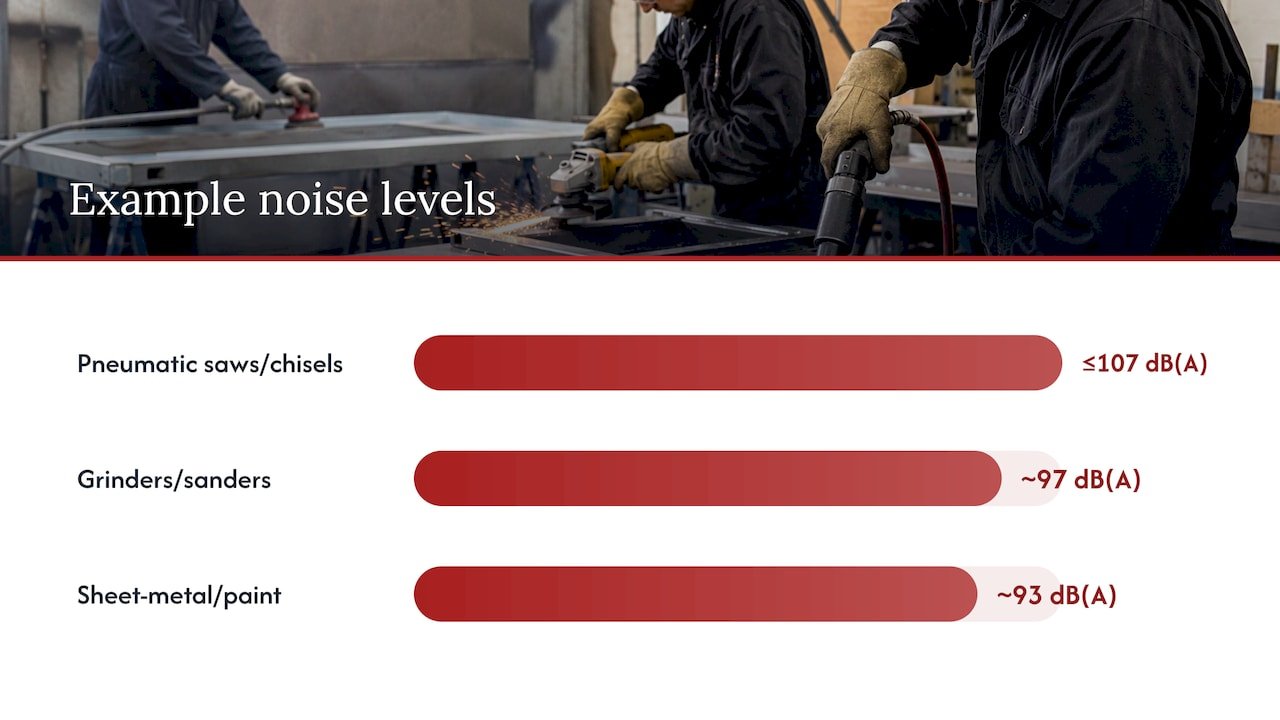
The same page lists typical culprits: concrete breakers, compactors, sanders, grinders, disc cutters, hammer drills, chipping hammers, cartridge-operated tools, scabblers, needle guns and heavy plant. HSE’s page on noise from vehicles and equipment gives example levels: pneumatic air saws and chisels up to 107 dB(A), grinders and orbital sanders around 97 dB(A), and sheet-metal work and paint spraying around 93 dB(A). It also states that prolonged, excessive exposure can cause irreversible hearing damage and tinnitus.
Typical offices, shops and most restaurant dining rooms are not usually in this territory. They can still be tiring and hard to talk in, which is a different problem, covered further down.
Step one: the noise risk assessment
Under regulation 5, employers must assess the risk wherever employees are likely to be exposed at or above a lower action value. The assessment is based on observing working practices and gathering equipment information, with measurement where necessary. It must consider:
- the level, type and duration of exposure, including peak sound pressure;
- employees who are especially at risk;
- any interaction between noise and ototoxic substances or vibration;
- warning signals and other sounds that must stay audible;
- information from equipment manufacturers;
- quieter alternatives;
- exposure outside normal hours where the employer controls it, such as rest rooms;
- health surveillance findings;
- the attenuation of hearing protectors.
The assessment has to be reviewed regularly, and straight away if it may no longer be valid or the work changes significantly. Employees or their representatives must be consulted, and the significant findings and the measures planned must be recorded.
A useful habit: map the workplace by area and by job. List who spends how long near which machine, then see which combinations come close to 80 or 85 dB(A). The result tells you where to spend money first.
Step two: reduce noise at source
The regulations ask employers to eliminate the risk at source where reasonably practicable, or otherwise reduce it as low as reasonably practicable. The regulations themselves list the means: quieter working methods and equipment, better workplace and workstation layout, training, technical measures, maintenance, limiting exposure time and suitable work schedules with rest periods.
HSE’s construction guidance suggests working down a sensible order before relying on ear protection: consider an alternative process, choose low-noise equipment, isolate the source or operate it remotely, add barriers or enclosures, increase distance, restrict access and rotate workers.
In practice, that means things like:
- Buy quiet. Make noise output part of the purchase decision for any new tool or machine, and ask manufacturers for their noise data.
- Maintain. Worn bearings, loose guards and unbalanced fans get louder over time.
- Enclose or screen. Put the noisiest machine in its own room or behind an enclosure, away from people who do not need to be there.
- Mount and damp. Vibration-isolating mounts and damping stop machine noise travelling into structures.
- Plan the day. Schedule the loudest tasks for when fewer people are present, and rotate staff so nobody takes the whole dose.
Step three: hearing protection and hearing-protection zones
The duties step up with the level, as set out in HSE’s L108 guidance:
- At or above the lower action value (80 dB(A)): hearing protectors must be made available to any employee who asks for them.
- At or above the upper action value (85 dB(A)): the employer must provide protectors, make sure they are used, and designate and sign hearing-protection zones, with access controlled where practicable.
HSE is clear that protectors are a supplementary or short-term measure while other controls are developed, not a replacement for technical and organisational controls (brief guide).
Choosing protectors is not simply a matter of the highest rating. L108 advises aiming for roughly 70 to 80 dB(A) at the ear. Going below 70 dB(A) can make it hard to talk and to pick up warning signals, which creates its own safety risk. On top of that, HSE’s advice on issuing hearing protection says protectors must suit the work, be correctly fitted, be maintained and be replaced when necessary, with training on fitting, use, storage, care and reporting damage.
Step four: information, training and health surveillance
Where exposure reaches the action values, employees need clear information and training on the risks, the controls in place, how to use protectors and how to report problems.
Health surveillance means regular hearing checks, and it is required where the assessment identifies a risk to health, particularly for people regularly exposed above the upper action value or who are otherwise vulnerable. HSE’s brief guide describes annual checks for the first two years of exposure, then every three years, with more frequent checks where indicated. Hearing checks also show whether your controls are working. HSE Northern Ireland adds that workers with pre-existing hearing loss or exposure to ototoxic chemicals may need checks even below the usual trigger.
Employees who want to understand their own ear health beyond the workplace programme can look at professional ear health options from clinicians who deal with hearing and ear care.
What if exposure reaches 87 dB(A)?
This is a question site managers ask often. Under regulation 6, the exposure limit must not be exceeded. If it is, the regulations require the employer to:
- reduce exposure below the limit immediately;
- identify why it was exceeded;
- modify organisational and technical measures so it is not exceeded again.
In practice, stop or rearrange the task, move people out of the noisy area, then investigate. Was the protector the wrong type or badly fitted? Was a machine unmaintained? Did the work pattern change? Record what you found and what you changed, and review the assessment.
Where acoustic treatment fits
It helps to be precise about what different kinds of noise problem need.
Hearing-damage risk (machinery, tools, impact noise) is a matter for the controls above: source reduction, enclosure, limiting exposure, then protectors. The regulations decide the programme, and a competent person should measure and advise.
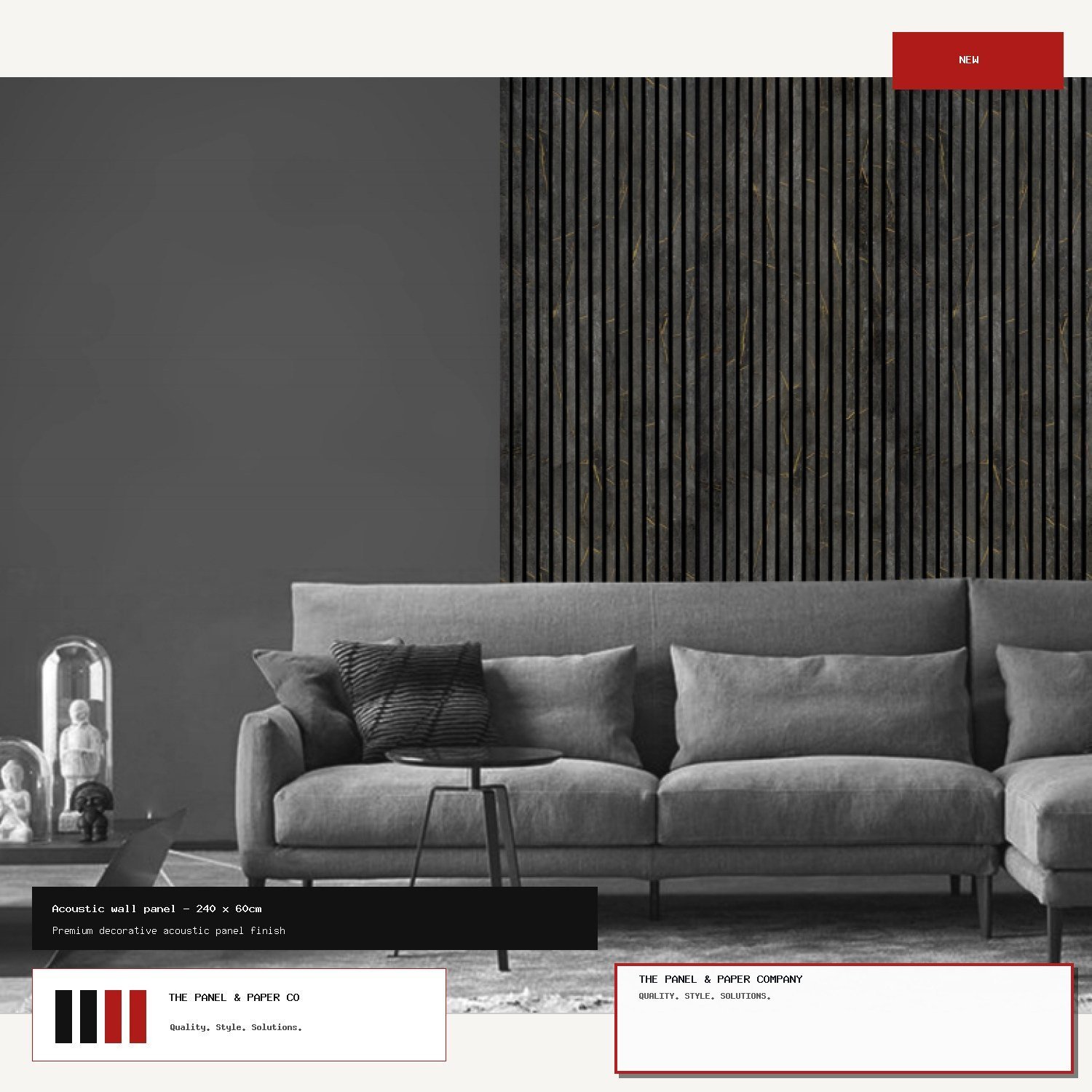
Room acoustics is the problem in places that are not dangerously loud but are tiring: an open-plan office where conversation carries, a call area, a restaurant where reflections from hard walls make the room feel louder than it is, a meeting room where speech is hard to follow. Here, absorbing sound on walls and ceilings reduces reverberation and improves speech clarity. We cover the difference between absorbing and blocking sound in our guide on whether acoustic panels soundproof a room, and the design targets in our office acoustics guide. If you run a busy phone-based team, our call centre acoustics page looks at layout before panels.
Better room acoustics also helps with something the regulations care about: people being able to hear each other and warning signals without shouting.
Quiet the room: our wall panels
If your issue is echo and background chatter, our acoustic wall panels are designed to absorb sound and soften hard-surfaced rooms. Our acoustic wall panel range in black oak, dark oak, grey, walnut and white oak is priced at £29.99 per panel, and the Ultra Low Cost range is £22.99 per panel. Samples start from £3.00 each on our samples page, so you can check colour and finish against your own walls. Every order carries our one-year warranty, and you can reach us on WhatsApp for quick questions.
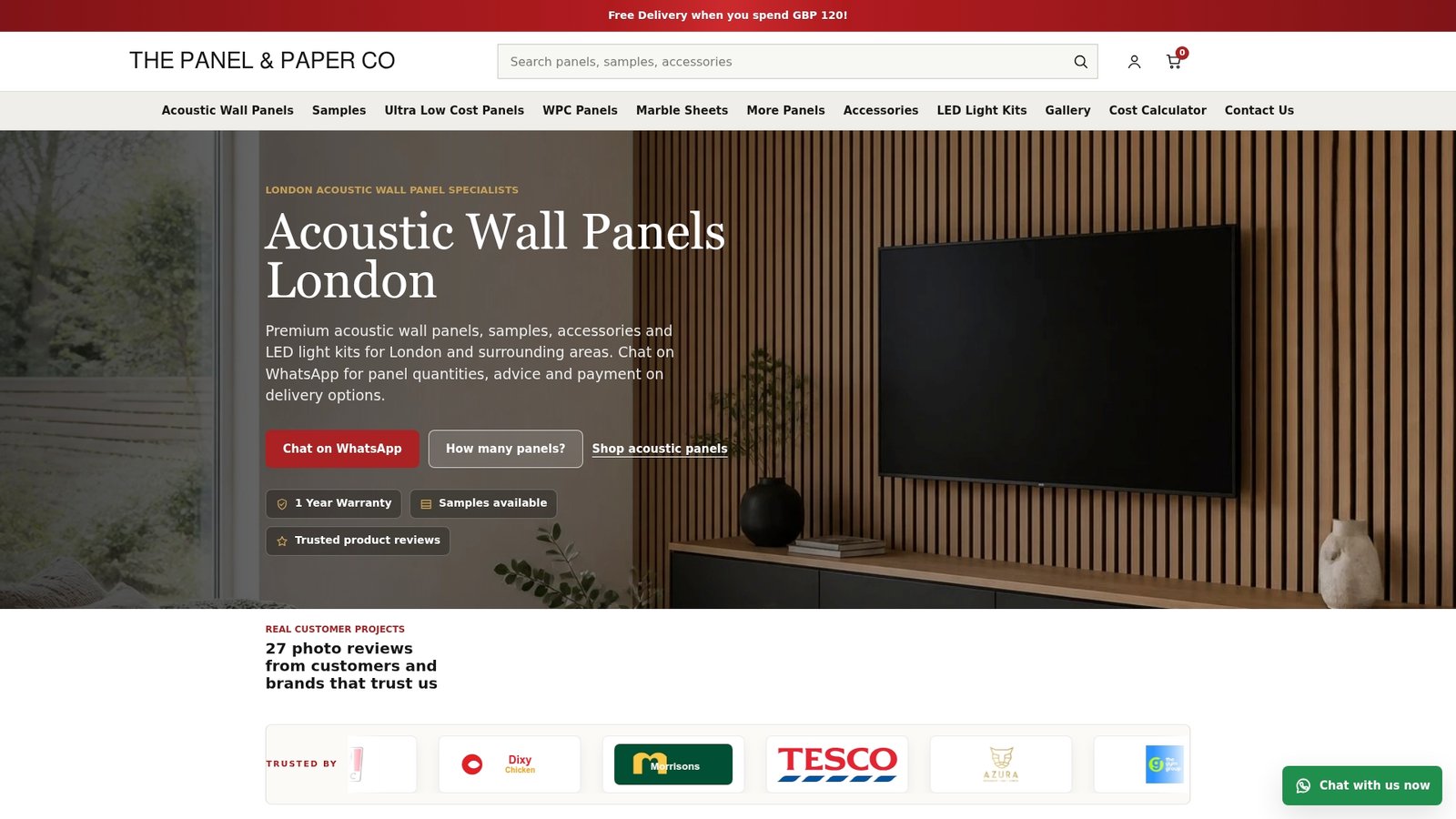
For a wider look at what is on offer, see our London acoustic wall panels home page.
Our perspective
We sell acoustic wall panels, so we see a lot of noisy rooms, and we see a lot of owners who mix up two different problems.
The first is dangerous noise. That is a legal matter, and the regulations are clear: assess it, control it at source, protect people, check their hearing. No wall panel replaces that process, and we would never suggest otherwise.
The second is the everyday noise of rooms that bounce sound around: offices, restaurants, studios, reception areas and home workspaces. Nobody’s hearing is at risk, yet people raise their voices, lose concentration and finish the day drained. This is where our panels are designed to help. They absorb sound, break up reflections and give a room a calmer feel, with finishes that look like part of the interior rather than an afterthought.
We believe good acoustics should not carry a luxury price. That is why we offer a wide range of styles and finishes at competitive prices, and why we answer questions quickly on WhatsApp. If you are not sure how many panels a room needs, ask us before you order.
Tayyy
A practical checklist for employers
- Walk the site and note areas where people must raise their voices at about 2 metres, or where noisy tools run for more than half an hour a day.
- Measure or obtain data for those areas, and calculate daily or weekly exposure per job role.
- Record the significant findings and consult employees or their representatives.
- Apply source controls first: quieter equipment, maintenance, enclosure, layout and scheduling.
- Provide protectors on request above 80 dB(A) and mandatory protectors with signed zones above 85 dB(A).
- Arrange hearing checks where the assessment shows a risk to health.
- Review the assessment regularly and whenever the work, equipment or layout changes.
- For rooms that are merely echoey, treat the surfaces with sound-absorbing finishes to make speech easier to understand.
FAQ
What is the legal noise limit at work in the UK?
The exposure limit value is 87 dB(A) daily or weekly, with a peak limit of 140 dB©, assessed with hearing protection taken into account. The lower and upper action values of 80 and 85 dB(A) trigger duties earlier. These apply in Great Britain under the Control of Noise at Work Regulations 2005.
At what noise level must an employer provide hearing protection?
At 80 dB(A) daily or weekly exposure, protectors must be available to employees who ask for them. At 85 dB(A), the employer must provide them, make sure they are worn and mark hearing-protection zones. Protectors should not replace controlling the noise at source.
Do the regulations apply to offices and restaurants?
They apply to any workplace where employees may be exposed to noise, but most offices and dining rooms sit well below the action values. If a kitchen, plant room or similar area is loud enough to make people raise their voices, it should be assessed. Echo and chatter in quieter rooms are better handled through acoustic design.
How often do employees need hearing checks?
Where the risk assessment shows a risk to health, HSE guidance describes annual checks for the first two years of exposure and then every three years, more often if indicated. The employer arranges these as part of health surveillance.
Sources
- HSE: Employers’ responsibilities and legal duties
- HSE: Controlling noise at work (L108)
- HSE: Noise at work, a brief guide (INDG362)
- The Control of Noise at Work Regulations 2005 (full text)
- The Control of Noise at Work Regulations 2005, regulation 5
- HSE: Construction physical ill health risks, noise
- HSE: Noise in vehicles and equipment
- HSE: Advice on issuing hearing protection
- HSENI: Health and medical surveillance
- Professional ear health options
Recommended
- Cut Office Acoustics rD to 5m: ISO/BS Targets for UK Designers
- Part E Sound Insulation: What the Rules Require and How to…
- Treat Your Noisiest Zone First: Office Noise Reduction With…
Ready to compare products? Shop acoustic wall panels