Homeowners: Diagnose Traffic Noise, Seal Gaps, Ventilate and Add Panels
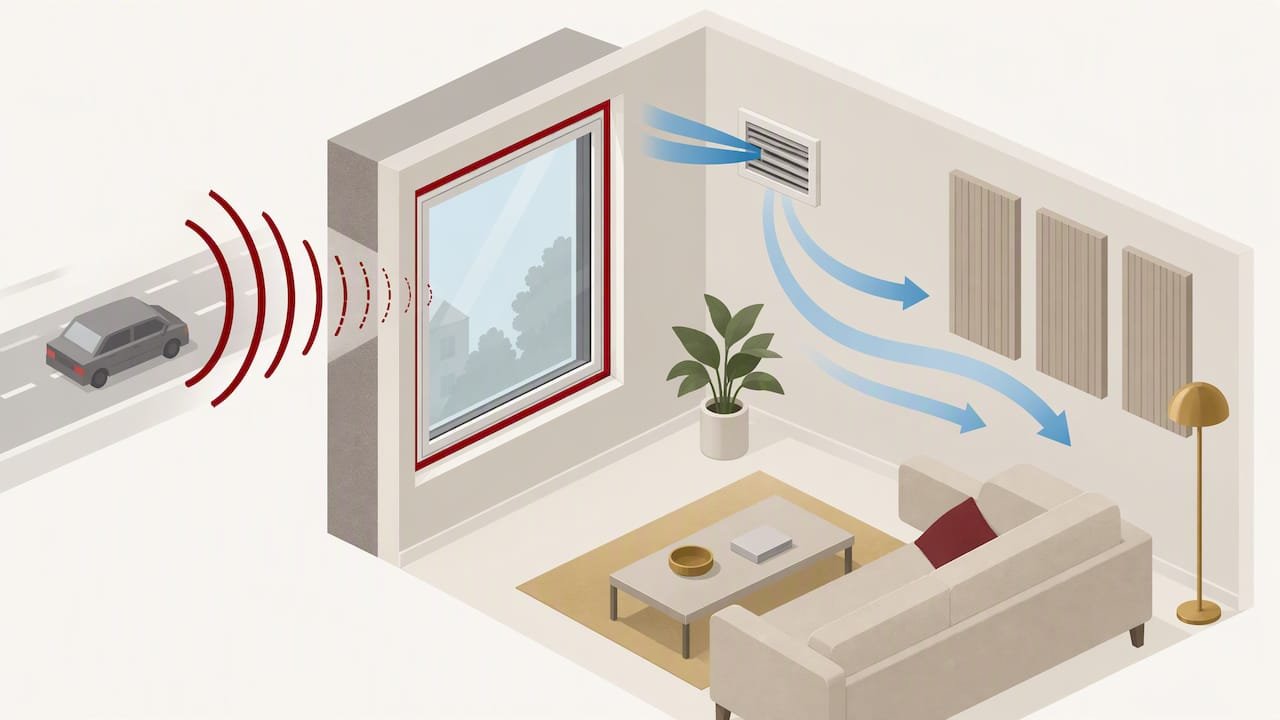
The fastest wins against road noise are sealing gaps around windows and doors, upgrading or adding secondary glazing with a generous air gap, and adding soft interior surfaces to absorb reflected sound. Ventilation needs separate attention so you do not trade noise for damp. Low-frequency rumble from lorries and buses is the hard case: it often needs structural work rather than a sealant gun. This guide walks through diagnosis first, then the fixes in order of effort.
TL;DR:
- Sealing gaps around windows and doors, with a focus on the air gap in secondary glazing, significantly reduces road noise indoors.
- Windows are the primary entry point for noise, and modern upgrades like a 10,000mm wide air gap in secondary glazing outperform thicker glass alone.
- Low-frequency rumble from heavy vehicles often requires structural modifications or specialist treatments, not just sealing or glazing.
- Improving ventilation with acoustic trickle vents or quiet mechanical systems is essential to prevent moisture issues when sealing the home tightly.
- Garden barriers are less cost-effective than sealing and glazing for indoor noise reduction but help more for outdoor noise screening.
Table of Contents
- Quick diagnostic checklist and what to try tonight
- How road traffic noise reaches rooms: common transmission paths
- Windows and glazing: sealing, secondary glazing and realistic glazing upgrades
- Doors and frames: sealing, thresholds and small fixes
- Walls, roofs and lofts: envelope measures and when to call a pro
- Ventilation: maintaining air quality while reducing noise
- Low-frequency rumble: identification and specialist responses
- Interior acoustic treatments and the role of decorative wall panels
- External measures: fences, berms and planting to reduce façade exposure
- Practical sequence: tests, temporary fixes, upgrades and when to call a specialist
- Publisher perspective: where panels fit and how we help homeowners
- How to order samples and get an installation estimate
- Sources
- FAQ
Quick diagnostic checklist and what to try tonight
Before spending anything, work out where the noise is getting in. Three simple tests tell you most of what you need to know.
- Stand in the room with the window shut, then open it for thirty seconds: a big difference points to glazing and frame gaps as the main route.
- Run your hand along the window and door seals while someone outside talks or a radio plays: a sudden change in loudness marks a leak.
- Note whether the sound is a steady drone or made of individual peaks: a constant hum suggests tyre noise and airflow paths, while sharp spikes (what acousticians call LAmax events) point to specific vehicles, braking, or a nearby junction.
Once you know the path, the fixes fall into rough speed bands. Tonight, for free: draw curtains, close trickle vents temporarily if air quality allows, and push a draught excluder against the worst gap. Within a few weeks and under fifty pounds: replace perished window seals, fit letterbox brushes, and add heavy curtains or a few absorptive panels. Within a few months: secondary glazing, acoustic trickle vents, or a professional glazing upgrade, which is where most of the lasting improvement tends to come from.
How road traffic noise reaches rooms: common transmission paths
Noise does not arrive through the wall in a uniform sheet. It finds specific weak points, and knowing which one dominates in your home saves you from fixing the wrong thing.
- Glazing and frame leaks are the single most common airborne path: gaps around sashes, worn putty, and tired weatherstripping let sound straight through even when the glass itself is thick.
- Flanking paths carry sound around a barrier rather than through it: window reveals, cavity walls with poor fire-stopping, and lightweight roof structures all transmit more than solid masonry.
- Ventilation openings, especially trickle vents and old-style airbricks, are deliberate holes in the building envelope and behave acoustically like small, permanent windows.
- Structure-borne vibration from heavy vehicles travels through the ground and into foundations, which is why low-frequency rumble can be felt as much as heard, particularly on upper floors above a busy road.
You can often tell which path dominates by testing at different times. If noise worsens sharply during the evening rush but fades indoors with the window shut, glazing and seals are doing most of the damage. If a low rumble persists even with windows sealed and curtains drawn, and seems worse near external walls than near the window itself, flanking or structure-borne transmission is likely the bigger contributor, and that changes which fix is worth your money.
Windows and glazing: sealing, secondary glazing and realistic glazing upgrades
Glazing is usually where the most noise gets in, and where the most cost-effective gains sit. The starting question is simple: are your existing frames basically sound but leaking, or genuinely unable to hold a good seal?
- If the frame is straight and the glass intact, reconditioning compression seals and re-puttying loose panes often closes most of the gap for very little outlay.
- If the frame is warped, single-glazed, or beyond simple repair, secondary glazing or new acoustic units are the more reliable route.
- For secondary glazing, the air gap between the original window and the new pane matters more than most people assume. Guidance from Historic England indicates that an airspace of around 10,000mm gives strong performance against road noise, particularly at lower frequencies, because the wide cavity decouples the two panes acoustically.
- Where secondary glazing is not an option, mixed-thickness and laminated acoustic glass units outperform matched-thickness double glazing, since differing pane thicknesses avoid the two sheets vibrating in sympathy at the same frequency.
The air gap is the detail installers skip to save money. A secondary glazing unit fitted with a narrow 50 to 100mm gap will cut some noise, but it will not deliver the low-frequency reduction a 10,000mm gap can, because the two panes still couple acoustically across a small cavity, as Historic England’s secondary glazing guidance sets out.
Sealing a window tightly without a plan for airflow creates a new problem, which is why any glazing upgrade should be paired with a deliberate ventilation strategy rather than just shutting the room off from outside air.
Doors and frames: sealing, thresholds and small fixes
Doors leak sound in much the same way windows do, often worse, because they have more moving edges and more hardware cut into them.
- Fit compression seals around the full perimeter of external doors, and add a drop-down threshold seal or brush strip at the bottom, where most draughts and noise sneak through.
- Letterboxes and cat flaps are frequently overlooked: a letterbox brush or internal cowl, and a draught-sealing cat flap insert, close gaps that otherwise undo an otherwise well-sealed door.
- For internal doors, especially to bedrooms facing the street, adding a simple seal kit and a heavier door slab improves night-time quiet more than people expect, since it blocks noise travelling through the rest of the house.
- Solid-core or acoustic-rated internal doors are worth the extra cost mainly for bedrooms on busy roads, where the small gain in mass meaningfully reduces disturbance during sleep.
Replacing an entire external door is rarely the first move. Try seals and thresholds first: they are cheap, reversible, and usually close most of the gap.
Walls, roofs and lofts: envelope measures and when to call a pro
Once glazing and doors are dealt with, persistent noise is often coming through the rest of the envelope, particularly where construction is lightweight.
- Internal lining with an independent stud wall, resilient bars, and added mass (extra layers of plasterboard or dense board) reduces sound transmission through solid and cavity walls alike, because decoupling the new layer from the existing wall stops vibration passing straight through.
- Lightweight roofs, dormers, and bay window roofs are common weak points: thin felt or tile battens over sparse insulation transmit far more noise than a well-insulated pitched roof.
- Loft insulation aimed at thermal performance often adds some acoustic benefit as a side effect, but treating a noisy dormer or bay specifically usually needs its own lining work, not just more loft insulation overhead.
- Cavity wall insulation and internal lining are typically weeks-long projects costing several hundred to a few thousand pounds depending on wall area, while external overcladding is a bigger, months-long undertaking best reserved for homes with persistent, severe exposure.
If you have sealed glazing and doors properly and noise is still intrusive, especially a low hum rather than traffic chatter, the envelope itself is probably the next place to look, and that is usually where a professional survey earns its cost.
Ventilation: maintaining air quality while reducing noise
Sealing a home tightly without rethinking ventilation is a common mistake, and a risky one: trapped moisture leads to condensation, mould, and poor air quality, particularly in bedrooms and bathrooms.
Approved Document F suggests that background ventilation noise in noise-sensitive rooms should ideally stay around 30 dB LAeq,T, which matters because a ventilator loud enough to be noticeable defeats the purpose of making the room quieter in the first place.
- Acoustic trickle vents use internal baffles to attenuate road noise while still allowing airflow, and are a straightforward retrofit into existing window or wall vents.
- Sound-attenuating mechanical ventilation units, including quiet mechanical ventilation with heat recovery (MVHR), let you close windows entirely while maintaining a controlled air supply.
- Positioning matters as much as the unit itself: siting intakes on a quieter elevation, away from the road-facing wall, cuts the noise reaching the vent before attenuation even comes into play.
Approved Document F’s roughly 30 dB LAeq,T guidance for background ventilator noise is the practical benchmark to check against when comparing acoustic trickle vents, since a unit rated well above that figure will undercut your other work.
Low-frequency rumble: identification and specialist responses
Low-frequency noise, the deep rumble of lorries, buses, and heavy traffic, behaves differently from the higher-pitched whine of car tyres, and it resists the fixes that work well on everything else.
- It often passes through seals, glazing, and even reasonably thick walls with little loss, because long wavelengths are harder to block with mass or air gaps alone.
- It can excite lightweight roof panels, stud walls, or window reveals into sympathetic vibration, so the sound seems to come from the structure itself rather than through a specific gap.
- Specialist responses include resilient mounts to decouple vibrating surfaces, adding mass specifically to lightweight elements such as roof decks or dormer cheeks, and in persistent cases, bringing in an acoustic specialist to measure and target the worst-performing surfaces.
To check whether rumble dominates in your case, place a hand flat against an internal wall or window reveal while a heavy vehicle passes: a felt vibration, more than an audible one, is a strong sign that low-frequency transmission, not airborne leakage, is the main culprit.
Interior acoustic treatments and the role of decorative wall panels
It helps to separate two different jobs. Sealing and glazing block sound from getting in (isolation). Interior treatments soften the sound already in the room by reducing reflections and perceived loudness (absorption). Panels do the second job well, but they do not raise a wall’s sound-blocking rating on their own, so they work best after the main transmission paths are addressed.
- Target reflection points first: the wall behind a television or sofa, and the headwall above a bed, reflect sound straight back into the room and benefit most from panelling.
- Aim to cover a meaningful portion of one or two key walls rather than scattering small pieces, since partial coverage on the right wall does more than light coverage spread everywhere.
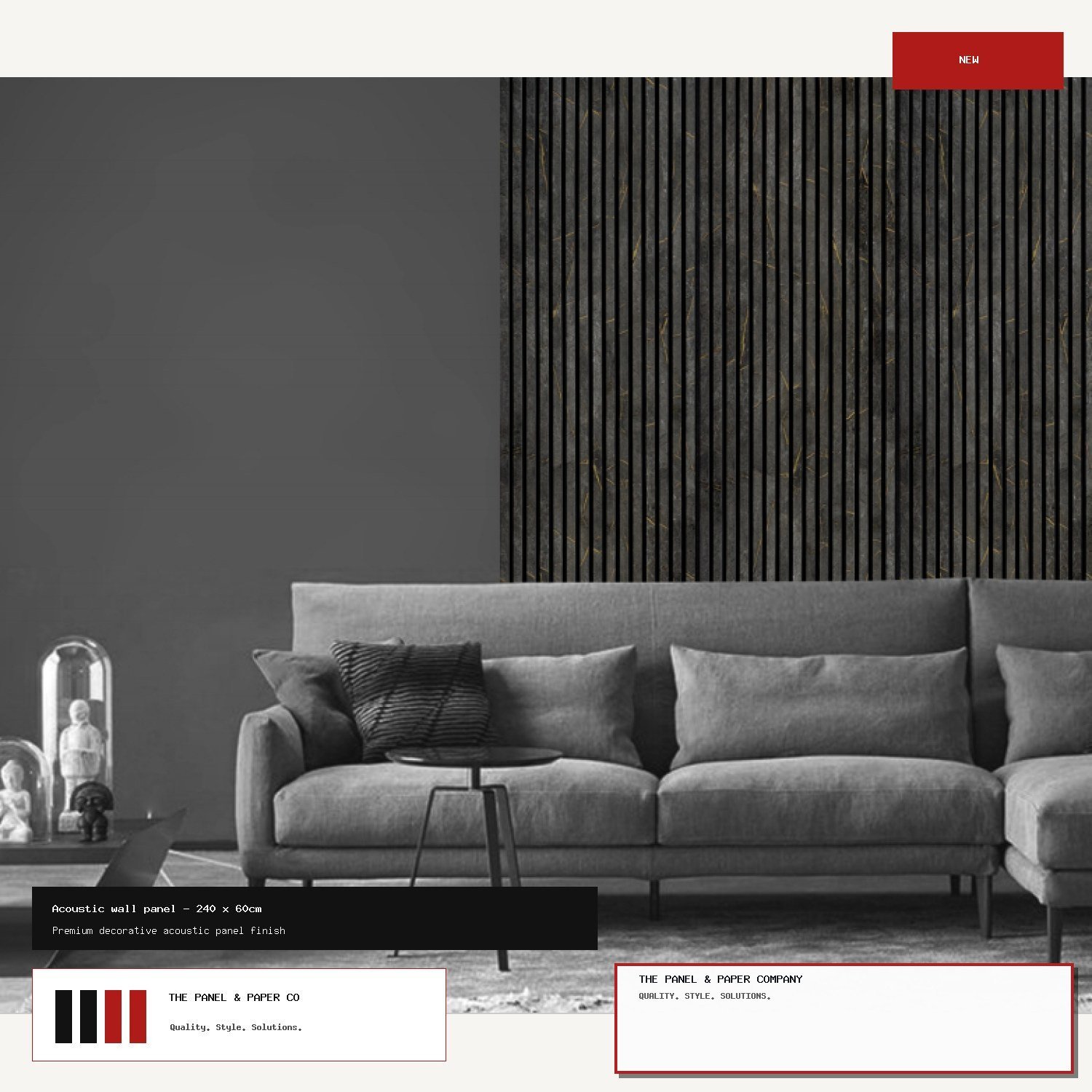
- Choose the finish to suit the room: slatted or fluted wood panels and WPC wave designs suit living rooms and hallways, while flat or marble-effect finishes often fit bedrooms and quieter spaces better.
- Order a sample before committing to a room’s worth of panels, and use WhatsApp support for quick questions about sizing or finish if you are unsure.
Pro Tip: Fit panels with construction adhesive onto a clean, dry surface, and treat window reveals and door frames as a last step so edges meet cleanly rather than being boxed in by panelling fitted too early.
Full installation detail, including adhesive and fixing choices, is covered in a guide on whether acoustic panels soundproof a room, and bedroom-specific placement is covered separately for panels in sleeping spaces.
External measures: fences, berms and planting to reduce façade exposure
Garden-side measures can help, but their performance depends heavily on height, mass, and distance from the road, and expectations should stay realistic.
- A barrier needs to be tall enough and close enough to the noise source to break the direct line of sound to the façade; a low or distant fence does very little.
- Dense planting offers a partial benefit, mainly visual screening plus a modest reduction in some frequency bands, rather than a dramatic drop in overall loudness.
- Solid masonry fences and earth berms, built with real mass and height, perform noticeably better than timber fencing or hedging alone.
- For most suburban plots, a tall solid barrier close to the boundary is rarely as cost-effective as sealing and glazing work on the house itself, since the façade sees noise from multiple angles that a single barrier cannot cover.
Garden measures are worth prioritising mainly where outdoor living space, not the indoor rooms, is the main concern.
Practical sequence: tests, temporary fixes, upgrades and when to call a specialist
- Tonight: close windows during peak traffic, draw heavy curtains, and press-test seals around the loudest window or door.
- This week: replace worn seals, fit a letterbox brush, and add temporary film or a draught excluder to the weakest point you found.
- Before spending on upgrades, record evidence: note the times noise peaks, count how many distinct LAmax events occur in a typical evening, and photograph window reveals and door seals so a professional has something concrete to assess.
- Within a month or two: fit secondary glazing with a wide air gap, acoustic trickle vents, or solid-core internal doors, depending on what the diagnostic stage pointed to.
- If rumble persists despite sealed glazing and treated ventilation, book an acoustic survey; a surveyor will typically measure noise levels at different times, inspect the structure for flanking paths, and recommend targeted work rather than a blanket retrofit.
Publisher perspective: where panels fit and how we help homeowners
Panels are not a substitute for sealing a leaky window or fixing a rumbling dormer. We say this often to customers who ask whether panels alone will quiet a room facing a busy road: they will not, not fully. What panels do well is finish the job once the transmission path is actually dealt with, softening reflections so a treated room feels genuinely calmer rather than just less draughty.
We hear from a lot of people who have already done the sealing and glazing work and want the last few decibels of perceived loudness gone, along with a better-looking wall. That is the point where panels make sense, not before. If you are unsure which stage you are at, our WhatsApp support can usually tell from a couple of photos, and our one-year warranty means a wrong finish choice is not a costly mistake.
— Tayyy
How to order samples and get an installation estimate
If your sealing and glazing work is done and you are ready to treat the room itself, ordering a physical sample first is the sensible next step, since finish and texture are hard to judge on screen.

Bedrooms and living rooms tend to suit different finishes: flatter, warmer tones work well behind a headboard, while slatted and wave-textured panels suit a living room feature wall. Browse the full acoustic wall panels range to compare finishes and sizes, or order a sample from the shop before committing to a full wall. For soft furnishings to pair alongside panelling, heavy lined curtains from suppliers such as The Perfect Stitch add a further layer of absorption. Message us on WhatsApp with a photo of your wall and we will talk you through sizing.
Sources
- Environmental noise guidelines for the European Region (WHO)
- Secondary glazing guidance (Historic England)
- Noise insulation scheme (National Highways)
FAQ
How can I reduce the noise coming into my house from the road?
Start by sealing gaps around windows and doors, since leaks there are usually the biggest single source of airborne noise. Follow with secondary glazing using a wide air gap, interior absorption such as heavy curtains or panels, and ventilation changes if you need to keep windows closed, as outlined by Historic England’s secondary glazing guidance.
What is the best way to lessen noise caused by traffic?
There is no single best method: sealing and glazing address most airborne noise, while structural work is usually needed for low-frequency rumble. The WHO environmental noise guidelines recommend keeping average road noise below 53 dB Lden, which is the kind of target glazing and sealing work is aimed at reaching.
How can I block traffic noise in my garden?
A tall, dense barrier close to the boundary, such as a solid masonry fence or earth berm, performs better than hedging or a low timber fence. Planting mainly helps with visual screening and offers only a modest reduction in some frequency bands, so garden measures work best for outdoor living space rather than as a fix for indoor rooms.
What is the best material to block road noise?
For windows, secondary glazing with a wide air gap, ideally around 10,000mm according to Historic England, outperforms simply thickening the glass. For walls and lightweight roofs, added mass combined with resilient decoupling works better than mass alone, particularly against low-frequency rumble.
Can I get help paying for soundproofing near a busy road?
Some properties near major roads may be eligible for support through the National Highways noise insulation scheme, which can include acoustic glazing and ventilation packages. Eligibility depends on the specific road and property, so check directly with the scheme rather than assuming coverage.
Recommended
- Do Acoustic Panels Soundproof a Room? UK Guide
- How to Clean Acoustic Wall Panels Safely | UK
- Acoustic Panels for Hallways & Stairs | London
- Acoustic Wall Panels in Rented London Homes
Ready to compare products? Shop waterproof marble wall sheets Shop decorative WPC wall panels