Are Acoustic Wall Panels Suitable for Nurseries? London Guide
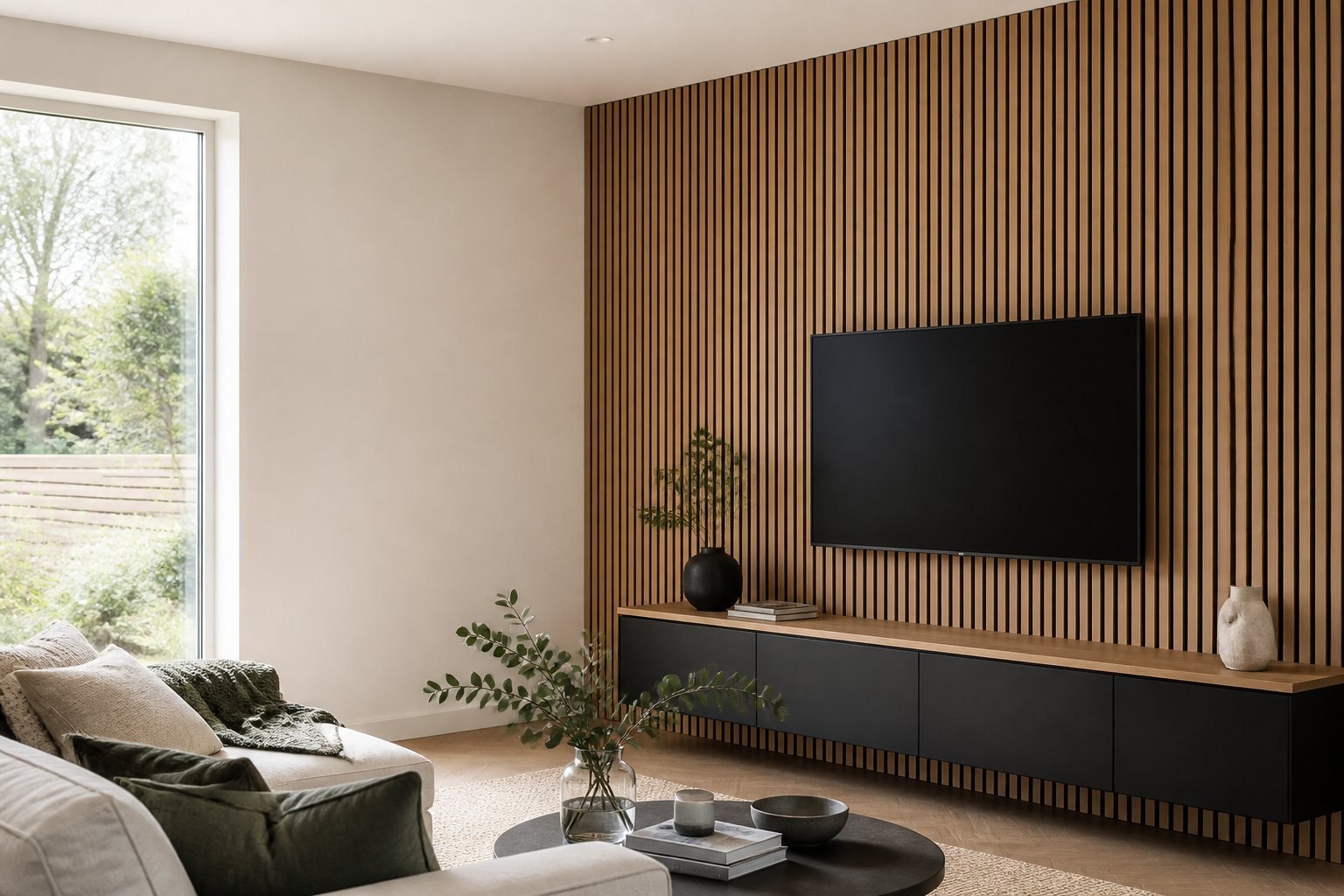
Yes, acoustic wall panels can suit a nursery when they are treated as a decorative feature on the right wall, rather than as a product that solves every sound or safety issue by itself. For most London buyers, the real question is not whether the panels look good in a nursery. It is whether the room layout, the fixing method and the day-to-day use of the space make them a sensible choice.
That matters in London because nurseries are often compact spare rooms, box rooms or corners of larger bedrooms. Many have cots, wardrobes, blackout blinds, monitors and storage all competing for the same wall space. If you are comparing finishes first, start with the acoustic wall panel collection, then think carefully about where the feature wall will sit in relation to the cot, changing unit, heater and window.
What acoustic wall panels can and cannot do in a nursery
Acoustic wall panels can help a nursery feel warmer, calmer and more finished than a painted wall on its own. The slatted surface also softens the look of a room that might otherwise feel quite hard if it includes laminate flooring, blinds, fitted wardrobes and white walls. In many London homes, that visual warmth is one of the main reasons parents choose them.
It is still important to keep expectations realistic. Decorative acoustic wall panels are not the same as full soundproofing, and they do not stop all sleep disturbance from traffic, neighbours or footsteps elsewhere in the building. If outside noise or sound transfer through the structure is your main concern, read our guide to acoustic panels vs soundproofing before treating the nursery project as a technical acoustic fix.
Where nursery wall panels usually work best
A feature wall away from the cot
The safest planning approach is usually to use panels as a feature wall that is not directly within a child’s reach from the cot or changing area. In a London terrace or flat, that often means the wall behind a dresser, the wall opposite the cot, or a section beside a reading chair rather than the wall immediately surrounding every piece of furniture.
A wall with a simple, uninterrupted layout
Nurseries often have less spare wall area than expected once wardrobes, radiators, sockets, shelving and curtains are taken into account. A cleaner wall tends to give a neater finished result and makes quantity planning easier. Before ordering, measure the usable width and height carefully and compare it with the chosen product dimensions or use the panel cost calculator for a first estimate.
Rooms where the panel finish supports the overall colour scheme
Nursery schemes usually rely on soft colour transitions rather than heavy contrast. Light and medium wood tones often work well with warm whites, muted greens, dusty pinks, pale blues and oatmeal shades. If you are still choosing, order samples first and compare them in daylight and evening lamp light. Our guide to acoustic wall panel colours for London interiors can also help narrow the finish.
What to check before you buy for a nursery
How the panels will be fixed
A nursery is not the place for a loosely planned installation. The wall should be stable, the panel layout should be tested before fixing, and any cutting around sockets or corners should be deliberate and tidy. If you are unsure about substrate condition, edges or access around fitted furniture, it is better to ask for advice before ordering than to improvise once the boxes arrive.
How much of the wall really needs covering
Many buyers do not need a full wall. A half-width or centred feature behind a chair, dresser or shelf can be enough to give the room identity without making it feel darker or busier. This is especially useful in East London flats and Victorian terraces where the nursery doubles as a guest room or future child’s room and flexibility matters.
How the finish behaves in the room’s light
Nurseries often look very different in the morning, during nap time with blackout blinds closed and in the evening under warmer bulbs. A finish that feels calm in one setting can appear much darker in another. Samples are worth the small extra step because they let you check the grain, undertone and contrast against paint, flooring and furniture already in the room.
Common nursery planning mistakes to avoid
- Choosing a wall before checking furniture clearances and window dressings.
- Assuming decorative panels will solve serious sound-transfer issues on their own.
- Ordering by phone screen colour rather than testing a sample in the actual room.
- Covering every wall when one well-placed feature would look calmer and cost less.
- Leaving quantity planning too late for a room with alcoves, sloping ceilings or awkward corners.
Are acoustic wall panels a good fit for every nursery?
Not always. They are usually a better fit where the nursery is dry, the wall is sound, the layout is settled and the design goal is a warm feature rather than a fully wipe-clean wet-area surface. They can be less suitable where the room is still changing quickly, where the best wall is crowded with obstacles, or where the buyer actually needs a different product family for moisture resistance or another performance requirement.
If your room is small, it may also help to compare the nursery idea with the way panels behave in other restful domestic spaces. The existing bedroom guide at Are Acoustic Wall Panels Suitable for Bedrooms? is useful for thinking about tone, layout and visual calm, even though a nursery has its own practical considerations.
How to get the right quantity and finish first time
Gather the wall width and height, note any radiators, sockets, shelves or boxed-in areas, and decide whether you want a full-width or partial feature. Then compare the live product dimensions and use the calculator for an estimate. If the nursery has awkward corners or built-in joinery, send measurements and a photo through the contact page so the layout can be checked before you place the order.
That extra step is often worthwhile for London buyers working with narrow rooms, chimney breasts, alcoves or furniture that needs to stay in place. It reduces guesswork and helps you choose a panel finish that feels intentional rather than squeezed in.
Frequently asked questions
Can acoustic wall panels go behind a nursery cot?
They can be planned as part of the overall room design, but buyers should think carefully about wall position, reach, fixing quality and the day-to-day layout of the room. A feature wall away from the most active nursery zone is often the simpler approach.
Do nursery wall panels make a room fully soundproof?
No. Decorative acoustic wall panels may help soften the feel of a room, but they are not a full soundproofing system for traffic, neighbours or structural noise transfer.
Which finish tends to suit a nursery best?
That depends on the furniture, paint and natural light in the room. Lighter and mid-tone wood finishes often work well in nurseries because they add warmth without making a compact room feel heavy, but samples are the best way to decide.
Should I order samples before buying nursery panels?
Yes, in most cases. Samples help you compare the finish against cot wood, flooring, paint and textiles under the actual light conditions in the room.
Ready to compare products? Shop flexible wood wall panels Shop acoustic wall panels