3 In Stock Stylish Corner Acoustic Panels That Work For UK Homes

If you want corner-friendly acoustic panels that look designed rather than bolted on, the White Acoustic Wall Panel (240 x 60cm), the Ultra Low Cost Black Acoustic Wall Panel and the Ultra Low Cost Teak Oak Acoustic Wall Panel are the three options worth shortlisting. Each reduces reverberation and background noise rather than targeting low-frequency bass, so your next move is simple: order a sample and confirm your mounting void depth before you buy.
TL;DR:
- Correctly fitted panels at the right void depth significantly improve speech clarity and reduce background noise in corners, rather than just enhancing aesthetics.
- Thicker panels with deeper voids absorb more sound, especially in mid- and high-frequency ranges critical for speech and conversation.
- Plausible performance relies heavily on proper mounting, with the void depth matching manufacturer tests, and placement in the upper third of the wall.
- Types and finishes matter; natural-looking panels like teak oak suit warm interiors, while white and black slats suit modern or industrial styles, but should be tested in lighting conditions beforehand.
- The panels are designed to control reverberation, not block outside noise, so over-coverage does not automatically result in a quieter room.
Table of Contents
- Which panels suit corner mounting and what each one is best for
- What actually determines corner acoustic performance
- Where and how to mount panels around a corner
- Choosing colours, textures and lighting that still do their job
- What panels cost, how to sample them and what the warranty covers
- A straight answer from someone who has fitted these
- How corner panels differ from bass traps and broadband panels
- How well corner panels actually absorb sound
- What corner panels are made from and why it matters
- Keeping corner panels looking and performing their best
- Where corner panels make the biggest difference
- The real lesson on corner acoustic panels
- Order corner panels and samples from our range
- FAQ
- Sources
Which panels suit corner mounting and what each one is best for
Corners catch sound differently from flat wall runs, so the panel you pick should suit both the room’s mood and the amount of wall you need to cover. These three options provide a practical range from neutral and minimal through to warm and hospitality-ready.
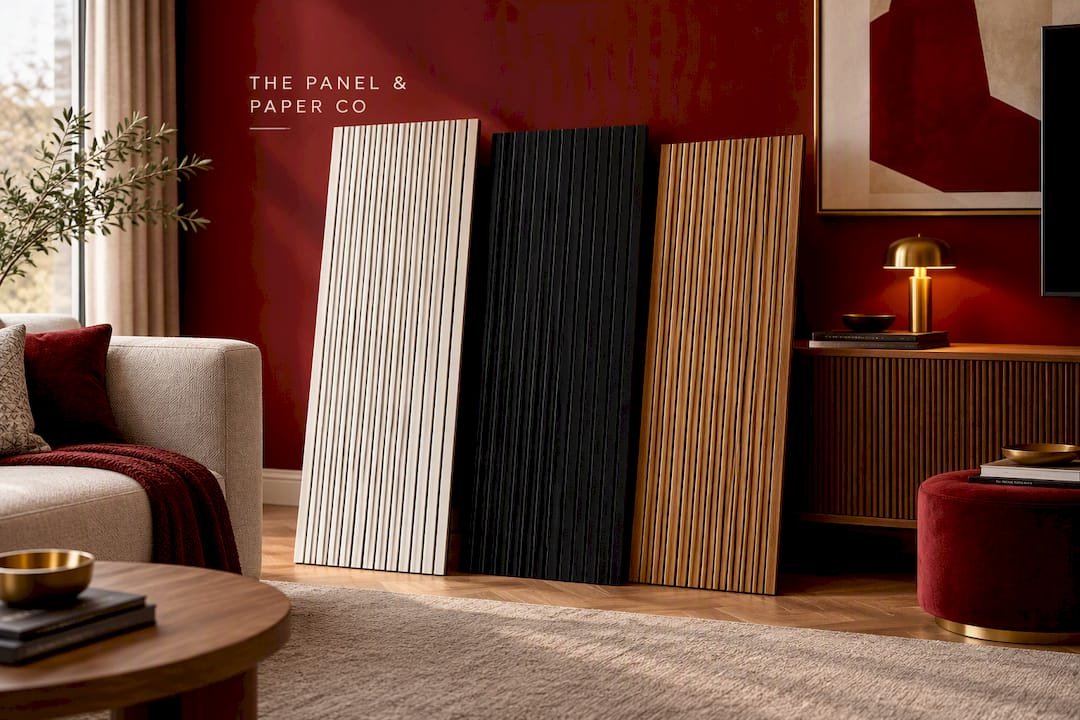
- White Acoustic Wall Panel (240 x 60cm): a clean, neutral finish that suits modern living rooms and dining areas where you want visible corners to look tidy rather than treated.
- Ultra Low Cost Black Acoustic Wall Panel: a budget-friendly option for larger coverage or informal commercial spaces, such as studios, back offices or casual dining corners.
- Ultra Low Cost Teak Oak Acoustic Wall Panel: a warm wood-look finish suited to restaurants and hospitality interiors where the panel itself becomes part of the décor.
The white and black panels come in a straightforward slatted format that works well stacked or paired across a corner angle, while the teak oak option leans into grain and tone, so it tends to suit spaces with other natural materials nearby. Before committing to a full run, it is worth ordering acoustic wall panel samples to check the finish under your own lighting. Every panel line carries a one-year warranty, which covers manufacturing faults rather than installation errors, so getting the fixing right still matters.
What actually determines corner acoustic performance
Picking a panel on looks alone risks disappointment once it is on the wall, so a few technical points are worth checking first. The core idea is reverberation time, or RT: the time it takes for sound to decay by 60 decibels, and it is the standard measure used to judge whether a room sounds clear or muddled. Lowering RT in the right places improves speech clarity and cuts background noise, which is usually the whole point of adding panels to a corner in the first place.
- Absorption and thickness: thicker panels and a deeper void behind them generally absorb more across a wider frequency range.
- Mounting and fixing type: corner brackets, French cleats and adhesive strips all behave differently depending on wall type and panel weight.
- Fire rating and manufacturer data: check the test report rather than assuming, since ratings vary between product lines.
- Modular sizing: panels that come in consistent widths are easier to arrange symmetrically across an internal or external corner.
UK guidance on sound insulation and noise reduction recommends establishing the room’s intended use first, then calculating the absorption needed to hit that target, rather than treating a corner because it looks bare.
Pro Tip: Measure your corner’s height and width before ordering so you can plan panel counts around full widths rather than awkward offcuts.
Where and how to mount panels around a corner
Placement affects performance as much as the product you choose, so it pays to plan the layout before drilling anything.
- Mark the upper third of the wall. Absorbers placed here stay clear of furniture and people, which keeps absorption consistent across the room rather than patchy at skirting height.
- Check your void depth. FIS guidance on installing acoustic absorbers notes that the gap between wall and panel affects measured performance, so match the fitted depth to what the manufacturer’s test report specifies.
- Plan an L-arrangement. Running panels along both walls of the corner, with a slight overlap or staggered vertical start point, avoids a single flat reflection point and spreads absorption more evenly.
- Match fixings to the wall. Plasterboard needs mechanical fixings into studs or weight-rated plugs; solid brick usually takes adhesive or screw fixings directly. Larger or heavier panels suit French cleats, which also make realignment easier.
- Confirm after fixing. Check every bracket is secure, gaps are even along the run, and nothing is blocking the void behind the panel.
For anyone unsure about wall type or load limits, it is worth asking whether a local installer should handle the final fix, particularly for teak oak panels, which carry more weight than the slatted lines.
Choosing colours, textures and lighting that still do their job
A corner treatment only earns its place on the wall if it looks intentional, so finish choice matters as much as acoustic spec. White suits a minimal, gallery-style room; black works for a more dramatic or industrial corner; teak oak brings warmth to hospitality spaces where guests linger.
- Use repeat patterns deliberately: aligning slat direction or repeating a panel width across both sides of the corner turns the treatment into a design feature rather than an afterthought.
- Add lighting where it suits the room: LED light kits can highlight slat texture, particularly on the teak oak finish, without affecting absorption.
- Finish with trim: wall panel accessories tidy panel edges where two runs meet at the corner angle.
- Always test a sample first: colour and grain can shift under different lighting, so checking a physical sample in the room avoids a mismatch once the full order arrives.
What panels cost, how to sample them and what the warranty covers
Pricing tends to track materials and finish complexity rather than acoustic performance alone.
- Entry-level: the Ultra Low Cost Black Acoustic Wall Panel and Ultra Low Cost Acoustic Panels range at £22.99 one-off per panel suit larger coverage on a tighter budget.
- Mid-range: the White Acoustic Wall Panel and the standard acoustic wall panel range sit at £29.99 one-off, with more finish choice.
- Premium: the Ultra Low Cost Teak Oak Acoustic Wall Panel adds grain and tone for a similar entry price point, while Premium Wide Slat Wall Panels start from £53.99 one-off per set of two.
- Samples: order two or three finishes, from £3.00 one-off per sample, and hold them against the actual corner wall at different times of day.
- On delivery: check for transit damage and confirm panel count against your order before fixing anything.
- Aftercare: the one-year warranty covers manufacturing defects, not fitting mistakes, and quick pre-purchase questions can go through WhatsApp support rather than waiting on email.
A straight answer from someone who has fitted these
Corner panels get judged on two things: whether the join looks deliberate, and whether the room actually sounds calmer afterwards. We have handled enough installations to know that most problems come from skipping the void-depth check, not from picking the wrong colour.
We specialise in acoustic wall panels for residential and commercial interiors, focusing on keeping premium finishes affordable rather than reserved for high-end commissions. Customer queries get a fast turnaround through WhatsApp, which is helpful when you are measuring a corner in person. Every panel line carries a one-year warranty, and the range of finishes is designed to match most interior briefs rather than forcing a compromise.
Panels fitted at the correct void depth and in the upper third of the wall consistently calm a noisy corner without the room losing its character.
Projects completed through our areas we serve pages show the same pattern: once the fixing and depth are right, the visual result and the noise reduction tend to arrive together.
How corner panels differ from bass traps and broadband panels
Decorative corner panels, bass traps and broadband panels all absorb sound, but they are built for different jobs. Broadband panels are flat, wide-area absorbers fitted across open wall sections to reduce general reflections and shorten reverberation time across a room. Bass traps are a separate category built to sit in room corners and tackle low-frequency build-up, typically in recording studios or home cinemas, and they are not the subject of this guide.
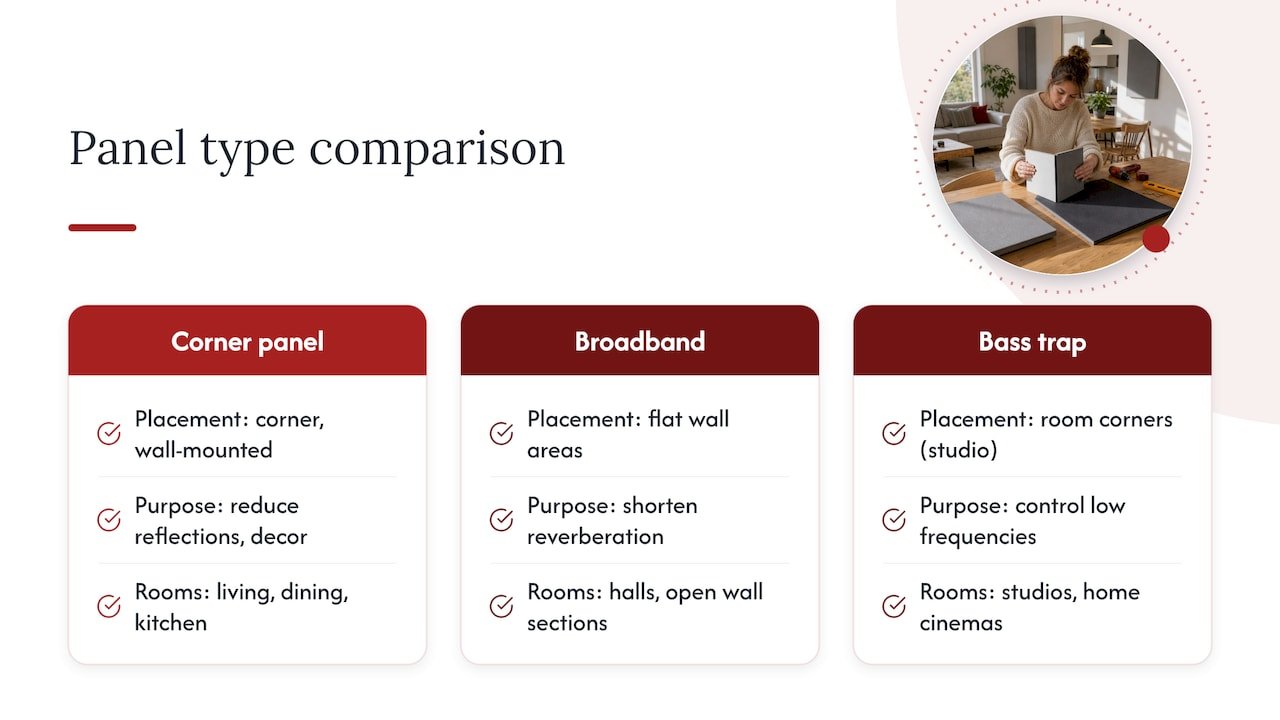
The panels covered here sit closer to broadband treatment in function, styled and sized specifically for corner placement so they do double duty as décor and as absorption. The Institute of Acoustics’ guidance on building acoustics frames this well: acoustic design is about balancing reflection and absorption for the room’s actual use, not chasing silence or targeting a single frequency band. For a dining room or reception corner, that means the goal is calmer conversation and less echo, which a decorative absorber handles without needing the bulk of a studio bass trap.
If your brief is genuinely about controlling bass frequencies in a dedicated listening or recording space, you are looking at a different product category entirely. For everything else, from kitchens to offices, a wall-mounted corner panel is the proportionate choice, and our guide on acoustic wall panels versus soundproofing explains the distinction between absorbing echo and blocking sound transfer in more depth.
How well corner panels actually absorb sound
Performance depends on thickness, surface texture and the depth of the void behind the panel, which is why manufacturer test data matters more than marketing copy. FIS guidance on specifying absorbers notes that installation depth is tested and documented for a reason: fit the panel closer to the wall than the test specifies, and you lose some of the expected absorption, particularly in the mid and upper frequency range where speech clarity lives.
In practice, this means a slatted panel with acoustic foam or felt backing, fitted at the depth the manufacturer tested, will do a reasonable job of softening voices, footsteps and general room chatter in that corner. It will not meaningfully touch the low rumble of traffic outside or bass from a neighbouring room, because that is a different acoustic problem requiring mass and isolation rather than surface absorption. UK guidance on sound insulation and noise reduction is useful here too: it recommends calculating what level of reduction a space actually needs before specifying panels, rather than assuming more coverage automatically means a quieter room.
What corner panels are made from and why it matters
Most decorative corner panels pair a slatted or grooved front face, usually in MDF, oak veneer or a painted finish, with an acoustic felt or foam backing that does the actual absorption work. The front face carries the look: white and black slats read as modern and architectural, while teak oak brings visible grain that suits warmer, hospitality-style interiors.
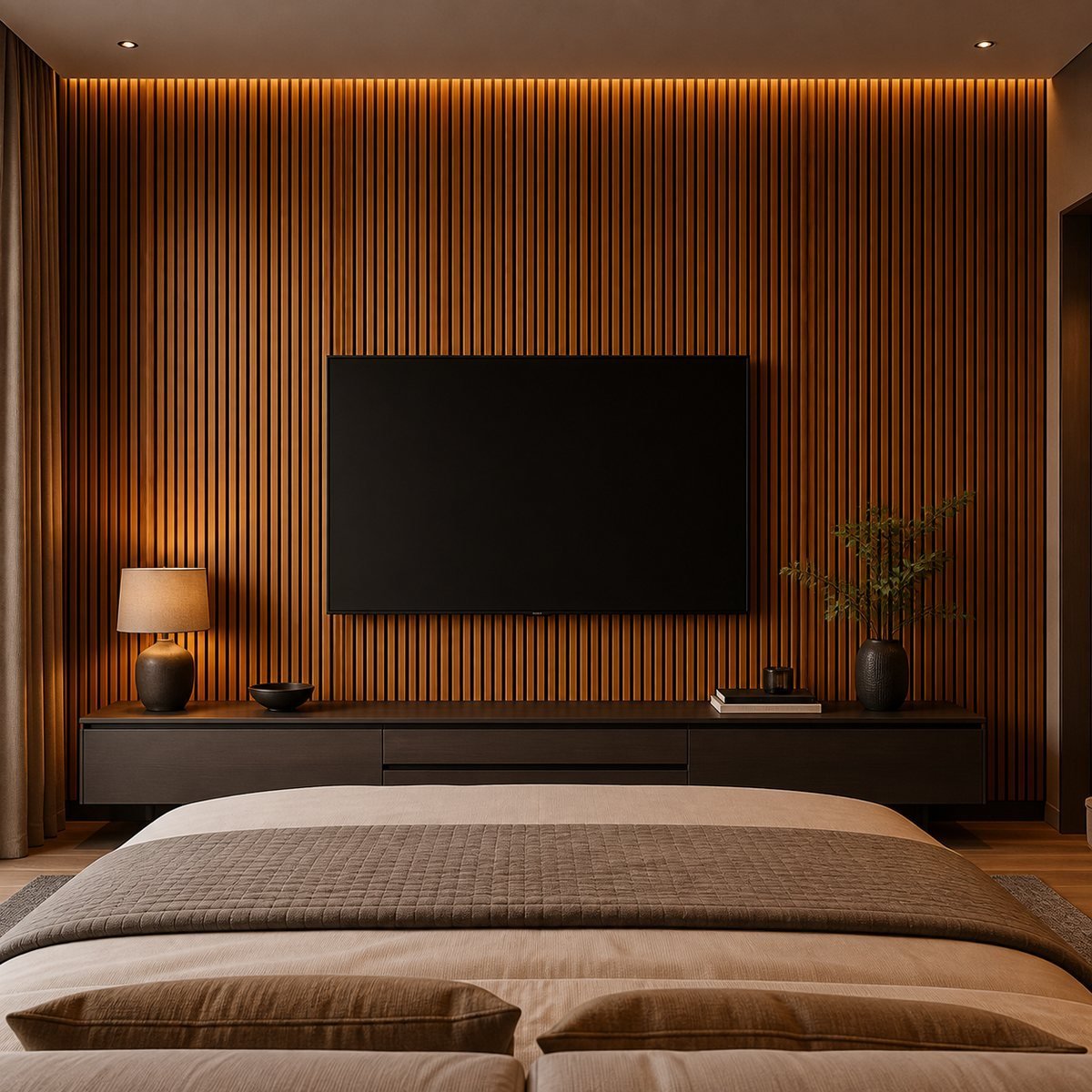
The backing material is where performance and durability diverge. Denser acoustic felt tends to hold its shape and absorption properties for longer, while thinner foam backings can compress over time, particularly in high-traffic commercial corners. Panel thickness also affects how the product handles minor knocks, which matters in corridors, reception corners and dining areas where contact is more likely than on a quiet living room wall.
Keeping corner panels looking and performing their best
Slatted and grooved panels collect dust in the grooves faster than flat wall surfaces, so a light once-over with a soft brush attachment on a vacuum, or a dry microfibre cloth, every few weeks keeps the finish looking fresh. Avoid wet cleaning on the acoustic felt backing, since trapped moisture can affect both the material and its absorption performance over time.
In commercial settings such as restaurants or reception areas, where panels sit closer to cooking smells or higher footfall, a slightly more frequent dry-clean routine helps maintain the finish. Check fixings annually, particularly in corners that see vibration from nearby doors or foot traffic, since a loosened bracket is the most common cause of a panel losing its even gap along the wall.
Where corner panels make the biggest difference
The clearest wins tend to show up in rooms where hard corners amplify everyday noise rather than music or speech specifically. In a restaurant corner booth, panels along both walls soften the clatter and conversation bounce that builds up where two hard surfaces meet at 90 degrees. In an open-plan office, a treated corner near a meeting area reduces the echo that makes video calls sound harsh. Fitness and studio spaces benefit too: guidance on acoustics in busy multipurpose rooms points to the same pattern, where reducing reverberation in a reflective, high-activity room noticeably calms background noise without changing how the space is used.
Home environments see a similar effect at a smaller scale. A living room corner behind a television, or a dining corner where chairs scrape against a hard floor, both benefit from the same upper-third placement and correct void depth covered earlier. The common thread across every one of these settings is that the panel is solving a reflection problem specific to that corner, not attempting to soundproof the room against outside noise.
The real lesson on corner acoustic panels
The biggest misconception about corner acoustic treatment is that more coverage automatically means a quieter room. It does not. A single well-placed, correctly fitted panel in the upper third of a problem corner usually outperforms two mismatched panels fitted too low or too tight against the wall.
Conventional advice tends to focus on finish and style first, which is understandable since that is what a buyer sees in a photograph. But the installations that actually change how a room sounds are the ones where void depth and placement were checked before colour was chosen. If you prioritise one thing on this list, make it the gap behind the panel, not the finish in front of it. Get that right and the aesthetic choice becomes genuinely low risk, because almost any finish will perform similarly once it is fitted at the depth it was tested for.
— Tayyy
Order corner panels and samples from our range
We keep this simple: pick a finish, check your void depth, and order a sample before committing to a full corner run. Our White Acoustic Wall Panel, Ultra Low Cost Black Acoustic Wall Panel and Ultra Low Cost Teak Oak Acoustic Wall Panel are all available to order directly, with samples from our shop if you want to check finish and texture first.
| Panel | Starting price | Best for |
|---|---|---|
| White Acoustic Wall Panel (240 x 60cm) | £29.99 one-off | Modern living and dining corners |
| Ultra Low Cost Black Acoustic Wall Panel | £22.99 one-off per panel | Larger coverage, informal commercial spaces |
| Ultra Low Cost Teak Oak Acoustic Wall Panel | £22.99 one-off per panel | Restaurant and hospitality corners |
- Check your mounting depth against the panel’s test specification before fixing.
- Message us on WhatsApp if you are unsure which finish or fixing suits your wall type.
- Browse the full acoustic wall panel range if none of the three above quite fits your corner.
FAQ
What are acoustic panel corner traps used for?
They are decorative wall-mounted panels fitted into room corners to reduce echo and background noise, improving speech clarity in homes, restaurants and offices. They work by absorbing sound reflections rather than blocking noise from other rooms.
How far should corner panels sit from the wall?
The gap, or void depth, should match the depth specified in the manufacturer’s test report, since fitting too close to the wall reduces absorption in the mid and upper frequency range, according to FIS installation guidance. There is no single correct distance that applies to every panel type.
Do corner panels replace soundproofing?
No, corner panels control reverberation and echo within a room rather than stopping sound transfer between rooms. Our guide on acoustic panels versus soundproofing explains the distinction in more detail.
Can I fit corner panels myself?
Most panels can be fixed with mechanical fittings suited to your wall type, such as stud fixings for plasterboard or adhesive and screw fixings for solid brick. Heavier panels or awkward corners may be easier with a local installer, particularly where cutting panels to size is involved.
Sources
- HyperPhysics — Reverberation time (RT) definition
- Institute of Acoustics — Standards and guidance for building acoustics
- Guidance on sound insulation and noise reduction for buildings (British Standards guidance)
Recommended
- 3 Wood Wall Panel Ideas for London Interiors
- Acoustic Panels Home Offices London Essex Guide
- Best Acoustic Wall Panels in London
- Why Wall Panels Work in Modern UK Interiors
Ready to compare products? Shop premium wide slat wall panels Shop acoustic wall panels