Reduce Noise Through Walls in UK Rentals Today Without Structural Work
To cut noise through ordinary walls most effectively, seal gaps, add mass and airtight linings, and use decoupling where needed, with acoustic panels used to reduce reverberation on top. Start with the cheap fixes: seal every gap around sockets and skirting, then add heavy curtains or a loaded bookcase against the noisy wall. Structural work such as independent stud frames only becomes necessary when sealing and mass alone fail to bring noise down to a comfortable level.
TL;DR:
- Sealing gaps around sockets and skirting boards is the most cost-effective step that can significantly reduce sound leakage through walls.
- Adding mass with an extra plasterboard layer or using mass-loaded vinyl is necessary when sealing alone cannot achieve desired noise reduction levels.
- Decoupling structures with resilient channels or independent stud frames effectively reduces low-frequency noise like bass and footfalls that pass through structural paths.
- Acoustic panels and soft furnishings mainly improve room reverberation and interior sound quality but do not block sound transmission through the wall.
- For persistent low-frequency noise or flanking sound through multiple junctions, hiring a professional for a site survey and tailored solutions is recommended.
Table of Contents
- Practical methods to reduce sound transmission, ranked by cost and effort
- Choosing materials that actually reduce wall noise
- Low-cost DIY fixes you can try today without altering the structure
- When to call in an acoustic professional
- Where acoustic wall panels fit into a retrofit plan
- What most advice on wall noise gets wrong
- Ordering panels or samples for your project
- FAQ
- Sources
Practical methods to reduce sound transmission, ranked by cost and effort
Fixing a noisy wall works best as a sequence, not a single purchase. Each stage below builds on the last, so start at the top and only move down if the result is not good enough.
- Seal every gap first. Acoustic sealant around socket boxes, foam gaskets behind faceplates, and proper sealing at skirting boards and door thresholds close the small leaks that let sound flank around even a well-built wall.
- Add mass. An extra layer of plasterboard, fixed with a sealed perimeter and a flexible adhesive or damping compound between layers, raises the wall’s resistance to airborne sound.
- Introduce a barrier layer where mass alone is not enough. Mass-loaded vinyl, hung within the stud cavity or behind new boarding, adds density without much thickness, though it needs full coverage and sealed seams to work.
- Decouple the structure if low-frequency noise persists. Resilient channels or an independent stud frame break the physical path sound travels through, which matters because research on double-stud assemblies shows that stud type and connection quality strongly affect how much a lightweight partition actually blocks.
- Treat the room for absorption. Acoustic panels, heavy curtains and soft furnishings cut echo and make a room feel quieter, though this works alongside barrier measures rather than instead of them.
Design guidance for noise control generally follows a similar order: quieten the source, attenuate the path, obstruct it, then improve the envelope, with calculation recommended once you are planning a significant intervention, according to British standards guidance on sound insulation.
Pro Tip: Fix the gaps before you spend money on anything else: a wall with unsealed sockets can leak more sound than a wall with no extra mass at all.
Choosing materials that actually reduce wall noise
Not every product marketed for soundproofing earns its price. Knowing what each material does, and where it sits in the wall, stops you overspending on the wrong layer.
- Mass-loaded vinyl typically comes in sheet form and sits within the stud cavity or directly behind new plasterboard; it needs continuous coverage and taped seams, since a single unsealed join undermines the whole sheet.
- Plasterboard adds mass with each layer, and fixing a second layer with staggered joints and a flexible adhesive performs better than simply screwing boards straight together.
- Mineral wool batts fill the stud cavity and absorb sound energy inside the wall itself, which is especially useful where a cavity already exists but was left empty.
- Absorption panels reduce reverberation inside a room but are a different function entirely from a barrier layer. A panel rated for sound absorption is tested against classes such as those in BS EN ISO 11654, not against airborne transmission figures, so check which performance claim a product is actually making before you buy.
Internal walls commonly target a laboratory sound insulation figure of approximately 40 dB, with recommended constructions and junction details set out in Approved Document E. That figure is a useful benchmark when comparing wall build-ups, even for a retrofit rather than a new partition.
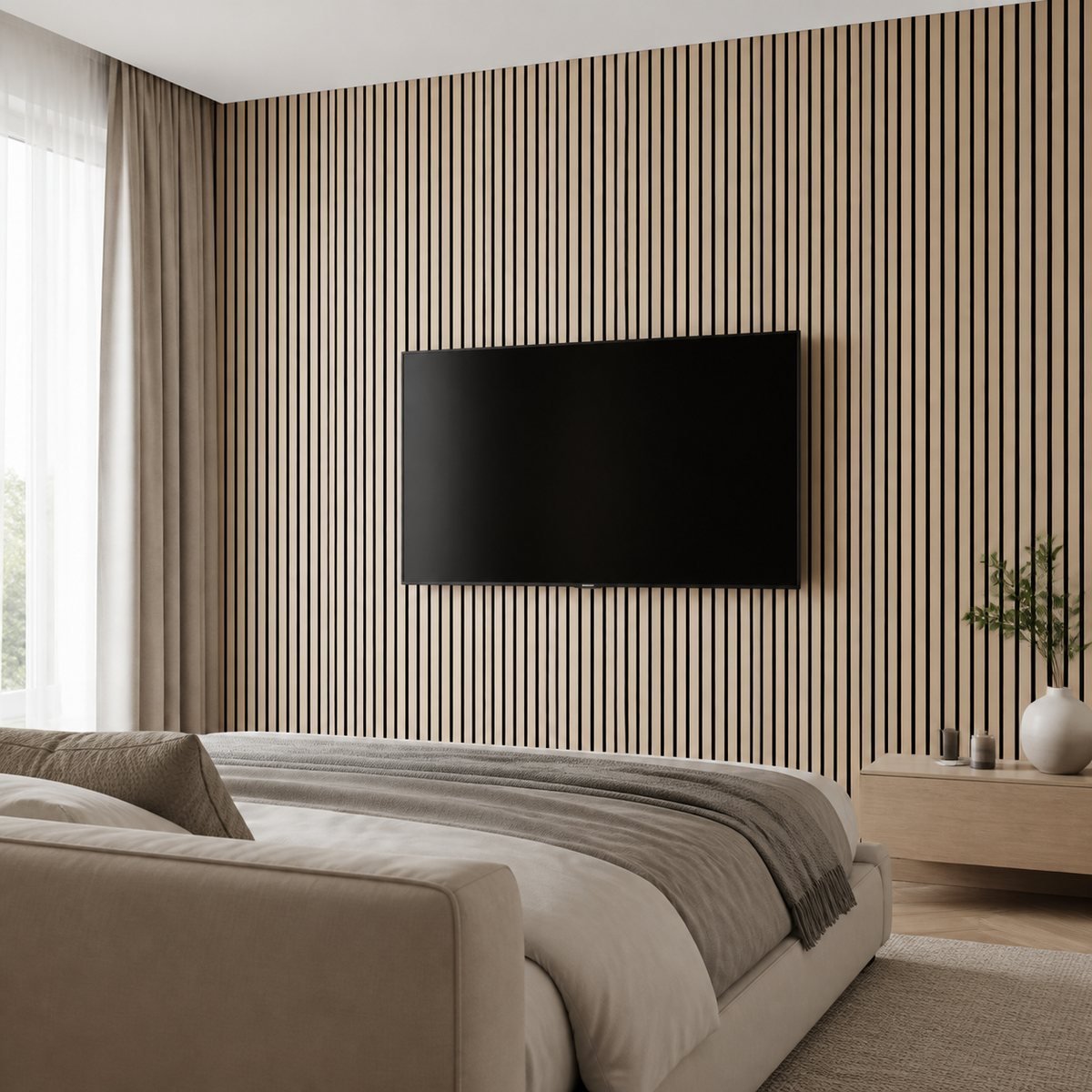
For the absorption side of the job, we stock three panel options that suit different rooms: the Ultra Low Cost Black Acoustic Wall Panel for a hallway or home office, the White Acoustic Wall Panel, 240 x 60cm for a bright living room, and the Ultra Low Cost Natural Oak Acoustic Wall Panel for a bedroom or snug, where a warmer finish suits the room.
Low-cost DIY fixes you can try today without altering the structure
If you rent, or just want results before committing to building work, several measures need no permanent change to the wall.
- Seal sockets and skirting with removable products. Draught-proofing strips and non-permanent acoustic sealants close gaps without damaging paintwork or breaching a tenancy agreement.
- Build a temporary soft wall. Hanging a heavy quilt, moving blanket or thick curtain against the noisy wall adds absorption instantly, and it is one of the fastest ways to lower a room’s echo.
- Reposition furniture for mass. A loaded bookcase or wardrobe pushed against a party wall adds real density where you cannot add plasterboard.
- Run a listening check. Sit quietly near the wall at different times of day and note whether speech, bass or footsteps come through; if bass and footsteps dominate rather than speech, sealing and soft furnishings will not solve it alone.
Sealing is consistently flagged as the highest-value first step in practitioner guidance, since small unsealed gaps and junctions are a major loss path even in an otherwise solid wall.
When to call in an acoustic professional
DIY and retrofit measures solve most everyday noise problems, but certain signs point towards bringing in a surveyor, acoustician or builder.
- Persistent low-frequency bass or footfall that sealing and mass additions have not touched, since this usually points to a structure-borne path rather than an airborne one.
- Flanking noise through multiple junctions (floor, ceiling and skirting all transmitting sound), which needs a proper site survey to trace.
- Party-wall disputes or a regulatory requirement, such as converting a space for separate occupation, where work must meet Approved Document E targets and be verified by testing.
- Planning a full partition rebuild, since a professional will specify decoupling, mass layers and junction detailing, then confirm results against recognised test standards rather than guesswork.
Expect a site visit, a sound survey, and a recommended construction, which in more demanding cases means rebuilding a stud wall as an independent double frame rather than simply adding linings to the existing one.
Where acoustic wall panels fit into a retrofit plan
Once sealing, mass and any decoupling work are done, panels handle the part barrier layers cannot: reflections bouncing around the room.
- Placing panels behind a TV or on the largest flat wall cuts flutter echo in open-plan living rooms.
- Hallways and stairwells benefit from panels at head height, where hard surfaces otherwise bounce footstep noise, as covered in our guide to acoustic panels for hallways and staircases.
- Bedrooms suit a lighter touch, a single feature wall is often enough; see our note on acoustic panels in bedrooms for placement ideas.
Our range covers finish and budget differences rather than performance differences: the Ultra Low Cost Black Acoustic Wall Panel and Ultra Low Cost Natural Oak Acoustic Wall Panel suit a budget-first room refresh, while the White Acoustic Wall Panel, 240 x 60cm works well where a larger, brighter panel suits the wall. All panels come with a one-year warranty, and WhatsApp support is available for quick questions about sizing or finish before you order.
Pro Tip: Measure the wall’s width and height before choosing a panel size: ordering too few panels for a large reflective wall is the most common reason the result feels underwhelming.
What most advice on wall noise gets wrong
Most guides on this topic jump straight to acoustic panels as though they solve airborne noise, when panels address reverberation inside a room, not sound passing through the structure. Absorbers lower reverberation time and improve how quiet a room feels, which is a genuinely different job to blocking transmission through a party wall.
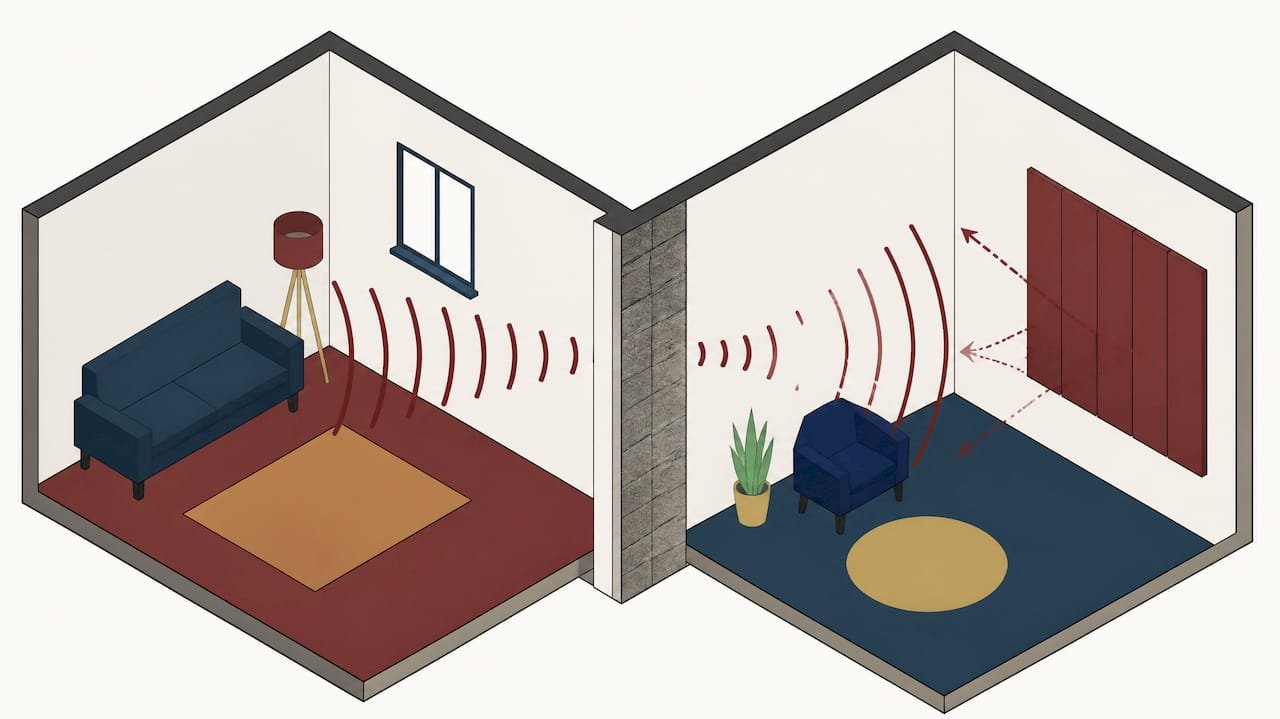
The conventional advice also underplays sealing. A plasterboard layer or a resilient channel system is worthless if sound is still leaking freely through an unsealed socket box or a gap at the skirting, yet most articles treat sealing as an afterthought rather than step one. Our view, based on how these measures actually interact, is that sealing deserves the first hour of effort and the first pound spent, before anyone buys mass-loaded vinyl or books a contractor.
Readers should prioritise diagnosis over products: work out whether the problem is airborne speech, footfall, or bass, because that decides whether sealing and panels will be enough or whether you are heading towards a stud wall rebuild.
— Tayyy
Ordering panels or samples for your project
Once you know roughly how much wall area needs covering, ordering is straightforward. We sell panels directly through our shop, alongside samples so you can check colour and texture against your room before committing to a full order.

- Measure your wall area first, including any sections you plan to leave bare, so you order the right quantity.
- Choose a finish, oak, black or white, based on the room and the light it gets.
- Request a sample via WhatsApp if you are unsure which finish will suit your space.
- Check the full range, including our acoustic wall panel collection, ultra low cost panels, flexible wood wall panels, premium wide slat panels, marble sheets and WPC panels.
Every panel carries a one-year warranty, and our WhatsApp line is there for quick sizing or finish questions. Worth being clear: panels improve absorption and how quiet a room feels, but where sound is passing through the structure itself, sealing, mass and decoupling are still the measures doing the real work.
FAQ
What is the cheapest way to reduce noise through walls?
Sealing gaps around sockets, skirting boards and door thresholds with acoustic sealant is the cheapest effective step, since small leaks undermine even a well-built wall. Adding a heavy curtain or repositioning a loaded bookcase against the noisy wall costs little and adds useful absorption and mass straight away.
Should I be able to hear my neighbours talking through the walls?
Internal walls between dwellings are generally designed towards a laboratory sound insulation figure of around Rw 40 dB under Approved Document E, which should reduce normal speech to a low murmur rather than clear conversation. If you can follow full sentences through a party wall, the construction is likely underperforming that target and worth investigating further.
How do I block noise on a shared wall?
Start by sealing every gap, then add plasterboard layers or a mass-loaded vinyl barrier within the existing structure for extra density. Where bass or footfall noise persists, decoupling the wall with resilient channels or an independent stud frame addresses structure-borne transmission that mass alone cannot fix, as shown by research on double-stud wall assemblies.
How can I do homemade soundproofing?
Hanging heavy quilts, moving blankets or thick curtains against a noisy wall creates a quick, removable soft wall that adds absorption without permanent changes. Combine this with sealed sockets and skirting, plus furniture placed against the wall for extra mass, for a renter-friendly setup that noticeably reduces perceived noise.
Sources
- Airborne sound insulation performance of lightweight double-leaf walls with different stud types (researchgate)
- British standards guidance: sound insulation and noise reduction (local copy)
Recommended
- Acoustic Wall Panels in Rented London Homes
- Do Acoustic Panels Soundproof a Room? UK Guide
- Wall Panels Small London Flats: Best Choices
- Acoustic Panels for Hallways & Stairs | London
Ready to compare products? Shop waterproof marble wall sheets Shop flexible wood wall panels