Library Acoustics: How to Control Noise and Echo
A library sounds good when you can hear a page turn but not the conversation three tables away. Getting there takes three things: a layout that keeps noisy and quiet activities apart, enough sound-absorbing surface to stop echo building up, and sound isolation where a room must stay private. Wall and ceiling panels handle the second job well. They cannot do the first or third on their own. This guide sets out the UK targets, the reasoning behind them and a practical way to treat a library, whether it is a school reading room, a community branch or a study at home.
TL;DR
- Libraries now host study, group work and social activity under one roof, so background noise has risen. Zoning comes first, panels second.
- UK guidance points to a library ambient level of about 40 to 50 dBA and a reverberation time of around one second or less. Study areas are often held to a tighter figure.
- Acoustic panels absorb sound and cut echo. They do not block noise passing through walls, doors or glazing.
- Spread absorption across walls and ceilings in the speech range, rather than covering one patch of wall.
- Order samples first, check the finish in your own light, then buy panels for the quiet zones.
Table of Contents
- Why libraries are hard to get right
- How loud should a library be?
- UK guidance and what it says about echo
- Zone first, then treat
- What acoustic panels actually do
- Where to put panels in a library
- Our perspective
- Choosing panels for a library or reading room
- What panels will not fix
- FAQ
- Sources
Why libraries are hard to get right
A library used to mean silence and shelves. Today it often means silent study, group tables, computers, a coffee corner and sometimes an events space. A 2023 European Acoustics Association paper reports that background noise has increased as libraries took on these social and multifunctional roles, with conversations, movement and phones among the main distractions. It also separates quiet study rooms, computer rooms and relaxation or coffee areas as spaces that each need different acoustic conditions.
Most library buildings make this harder. Hard floors, glass, plasterboard and tall ceilings reflect sound. Designing Libraries explains that when reverberation is excessive, simultaneous speech builds up the overall noise level and the room becomes uncomfortable. It adds that high ceilings increase reverberation time when left untreated.
The result is familiar. One person whispers, the sound bounces around, and ten people are distracted. Everyone then raises their voice a little to compensate, and the room gets louder.
Three jobs, not one
The State Library of New South Wales sets out three design objectives that translate well to any library: sound isolation or containment, noise management, and interior acoustic quality. Keeping them separate saves money:
| Job | What it means | What helps |
|---|---|---|
| Sound isolation | Stopping noise passing between rooms or in from outside | Dense, airtight construction, treated doors and glazing |
| Noise management | Controlling where noise is made | Zoning, screens, furniture layout, house rules |
| Interior acoustic quality | Controlling echo and reverberation inside the room | Absorbent panels, ceilings, soft furnishings |
The same State Library guidance notes that sound isolation improves with high-density, airtight construction, and that glazing and doors are weak points. A thin glass door into a study room will undo a lot of good work, however many panels you hang. If your problem is noise leaking between rooms rather than echo inside one, our guide to Part E sound insulation explains what the rules require and where panels fit.
How loud should a library be?
People often ask how many decibels a library is. RNID uses 40 dB as its example of a quiet library and 60 dB for ordinary spoken conversation. That 20 dB gap is large: on the decibel scale it is a big difference in perceived loudness, which is why one chatty table is noticeable in a quiet room.
For design, the Designing Libraries guidelines give a typical target of 40 to 50 dBA for ambient background noise in a library, and report an upper limit of 45 dBA in Building Bulletin 93. Treat these as the numbers a designer or acoustic consultant works to. They describe the steady background level, not the level of a single voice.
UK guidance and what it says about echo
Designing Libraries notes that acoustic guidance written specifically for libraries is relatively limited. It identifies two main documents with criteria and limits: BS 8233:2014 and Building Bulletin 93 (2015). BB93 is written for schools, so it matters most for school and university libraries, while BS 8233 is the wider guide for buildings in general.
Reverberation time is the number to understand. BATOD defines it as the time sound takes to decay by 60 dB after the source stops, measured in seconds. A long decay means words smear into each other and noise lingers.
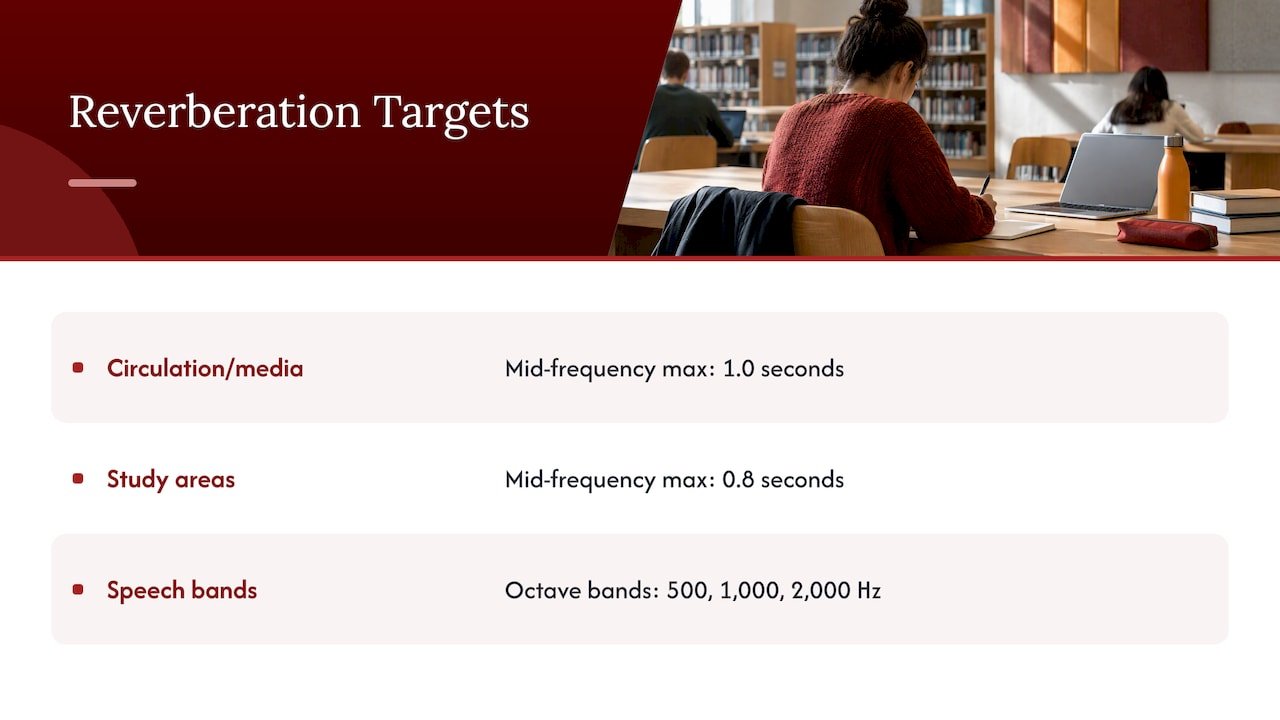
Targets vary by space. Designing Libraries says reverberation time should be no more than one second in the relevant guidance. One university example is more specific: the UWE Estates and Facilities Design Guide sets a maximum mid-frequency reverberation time of 1.0 seconds for library circulation and media-storage areas, and 0.8 seconds for library study areas. It defines mid-frequency reverberation time as the average of the 500 Hz, 1,000 Hz and 2,000 Hz octave bands, which is the range that matters most for speech.
In plain terms: a study area should be tighter than a lobby, and the figure is measured, not guessed. If you manage a public or school building and have a specific compliance target, ask an acoustic consultant to measure the room. A panel supplier cannot certify that for you.
Zone first, then treat
The cheapest acoustic improvement is putting loud things away from quiet things. The European Acoustics Association authors argue that rigorous layout planning is essential, because library activities create different noise levels and users need protected concentration spaces alongside deliberately social ones.
Designing Libraries recommends isolating sound-sensitive tasks from disruptive ones using zones, screens and acoustic pods. It also lists the mix in a modern library: bookstock, staff and study areas, meeting rooms, collaboration areas and sometimes an auditorium or multimedia hub. Activities that are acoustically incompatible should not sit side by side.
A workable order of preference:
- Distance. Put group tables, the café and the children’s area at the opposite end from silent study.
- Buffers. Place shelving, storage or circulation between noisy and quiet zones. Bookshelves are useful sound breakers.
- Screens. Designing Libraries says screens should be sufficiently high and wide, with solid cores and acoustically absorbent faces. A thin decorative divider does little.
- Enclosure. Use a glazed or solid-walled room or a pod for calls, groups and anything that cannot be quiet.
In a small space such as a community reading corner or a home library, you may not have the floor area for distance. Here dividers do the work, and these ideas for zoning a room with dividers show how to split areas without building walls. Remember that a divider only helps if it is tall, dense and has an absorbent face on the noisy side.
What acoustic panels actually do
This is where people are misled. Panels absorb sound energy and convert it to a very small amount of heat. That reduces reflections and reverberation. It does not make a thin wall soundproof.
BS 8233:2014 says porous sheets or panels can work across a broad frequency range depending on their structure and thickness. Designing Libraries recommends wall and ceiling absorbers effective in the speech frequency range, correctly configured and in sufficient numbers. Those last two points decide whether a project works. A few panels hung in one place give a small improvement. A well-distributed layer across the room changes how it feels.
So do sound absorption sheets work? Yes, for echo and reverberation, when enough of them are used in the right places. No, if what you need is to stop a neighbour’s drum practice coming through a party wall. For that you need mass and airtightness in the construction.
BS 8233 also lists what to consider when choosing an absorber: acoustic performance, appearance, durability, maintenance, fire spread and health and safety. In a public library, check the fire classification and the cleaning needs of any product before you buy. Ask for the product’s technical data, and for a public or school building, confirm the requirement with your building control or facilities team.
Hard-surface sound in a library: what to look for
BATOD lists hard wood, glass and plasterboard as sound-reflecting surfaces, and carpet, soft furnishings, curtains, fabric blinds and acoustic wall or ceiling tiles as absorbers. Walk the room and clap once. If you hear a ringing or fluttering tail, a bare parallel pair of walls is likely the cause. Our guide to finding and fixing flutter echo explains the test and where to place panels.
Where to put panels in a library
The aim is coverage spread across surfaces, not decoration in one spot.
- Ceiling first in tall rooms. Untreated high ceilings raise reverberation time, so ceiling absorbers usually matter most. Wall panels then handle what the ceiling cannot.
- Walls near seating. Treat the walls closest to tables and desks, at the height where voices travel, roughly head height seated and standing.
- Opposite pairs. If two parallel walls face each other, treat at least one, or stagger panels across both.
- Corners and ends of long rooms. Long, narrow rooms hold echo at the far end.
- Around noisy zones. Absorb at the source: the café, the computer area, the group tables, so sound does not travel into the quiet area.
- Do not over-deaden. A study space should feel calm, not dead. Some reflection keeps a room natural, and our piece on diffusion versus absorption helps you decide what each room needs.
A worked example: a home library or study
Take a 4 m by 5 m spare room with a laminate floor, a bare ceiling, a bookcase on one wall and a window on another. It echoes when you talk and rings if you clap. Start with the long wall opposite the window and cover a good share of it in panels. Add a second block on the end wall facing the door. Rugs, curtains and a bookcase full of books will do more. Then clap again. If the tail is shorter and speech is clearer, the layout is working. If not, add panels to the ceiling edge or the remaining bare wall.
The same logic applies for a desk setup, covered in our guide to panels behind your desk, and for an open-plan workplace, which we cover in call centre acoustics and trying a layout before buying.
Our perspective
We sell acoustic wall panels, and we would rather you spend money where it works. In our experience of what customers ask us, people usually come wanting to “soundproof” a room and really need to cut echo. Panels do that well, at a price that lets you cover enough wall for the effect to be noticeable. That is why we focus on affordable panels in a wide range of finishes: coverage matters more than a single expensive feature piece.
For a library or study area, our advice is simple. Settle the layout, work out whether your problem is echo or leakage, then treat the surfaces nearest the people who need quiet. Order samples before a bulk order so you can see the finish against your shelving and lighting. If you are unsure about quantity or placement, message us on WhatsApp and we will answer quickly.
— Tayyy
Choosing panels for a library or reading room
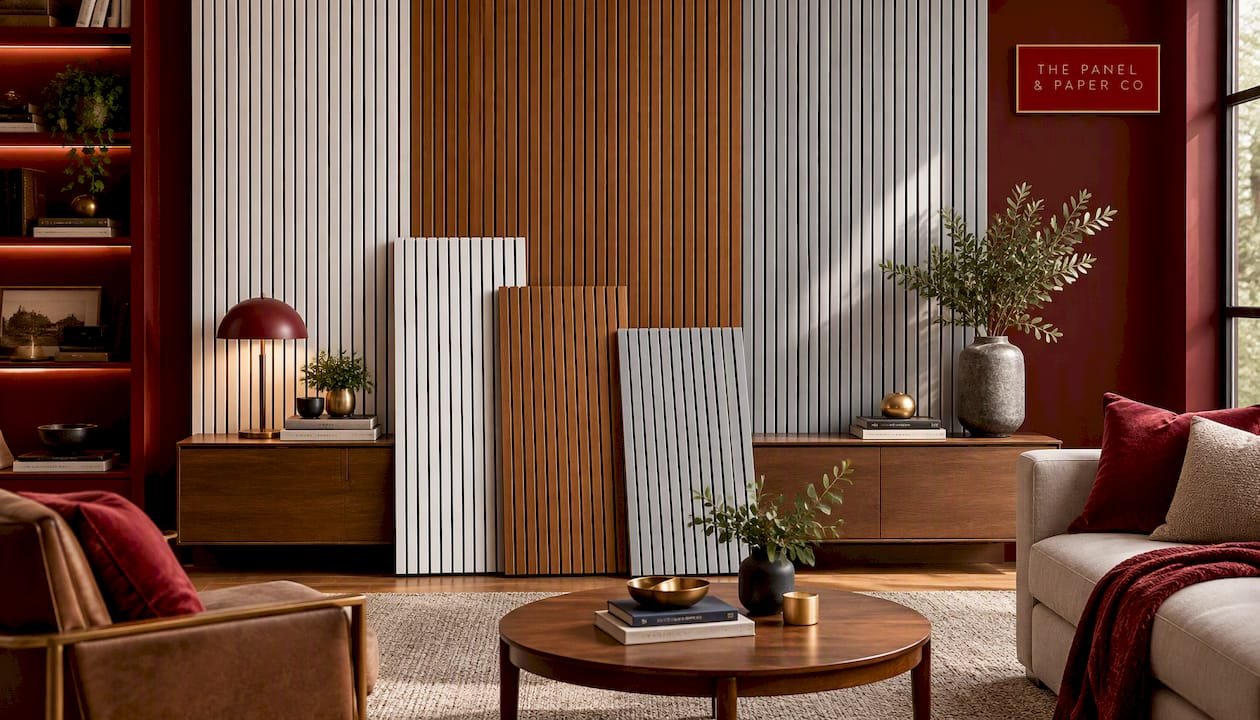
Our range suits different budgets and different looks. Wood-effect slat panels warm up a reading room and fit well beside shelving, while plain finishes suit a more neutral school or office library.
| Range | Price | Good for |
|---|---|---|
| Ultra Low Cost Acoustic Panels | £22.99 per panel | Covering large areas on a tight budget |
| Acoustic Wall Panels in Black Oak, Dark Oak, Grey, Walnut and White Oak | £29.99 each | Feature walls and study zones |
| Premium Wide Slat Wall Panels | From £53.99 per set of 2 | A bolder, wider-slat look |
| Flexible Wood Wall Panels | From £166.80 per set of 2 | Curved walls and columns |
| Samples | From £3.00 per sample | Checking colour and finish before you buy |
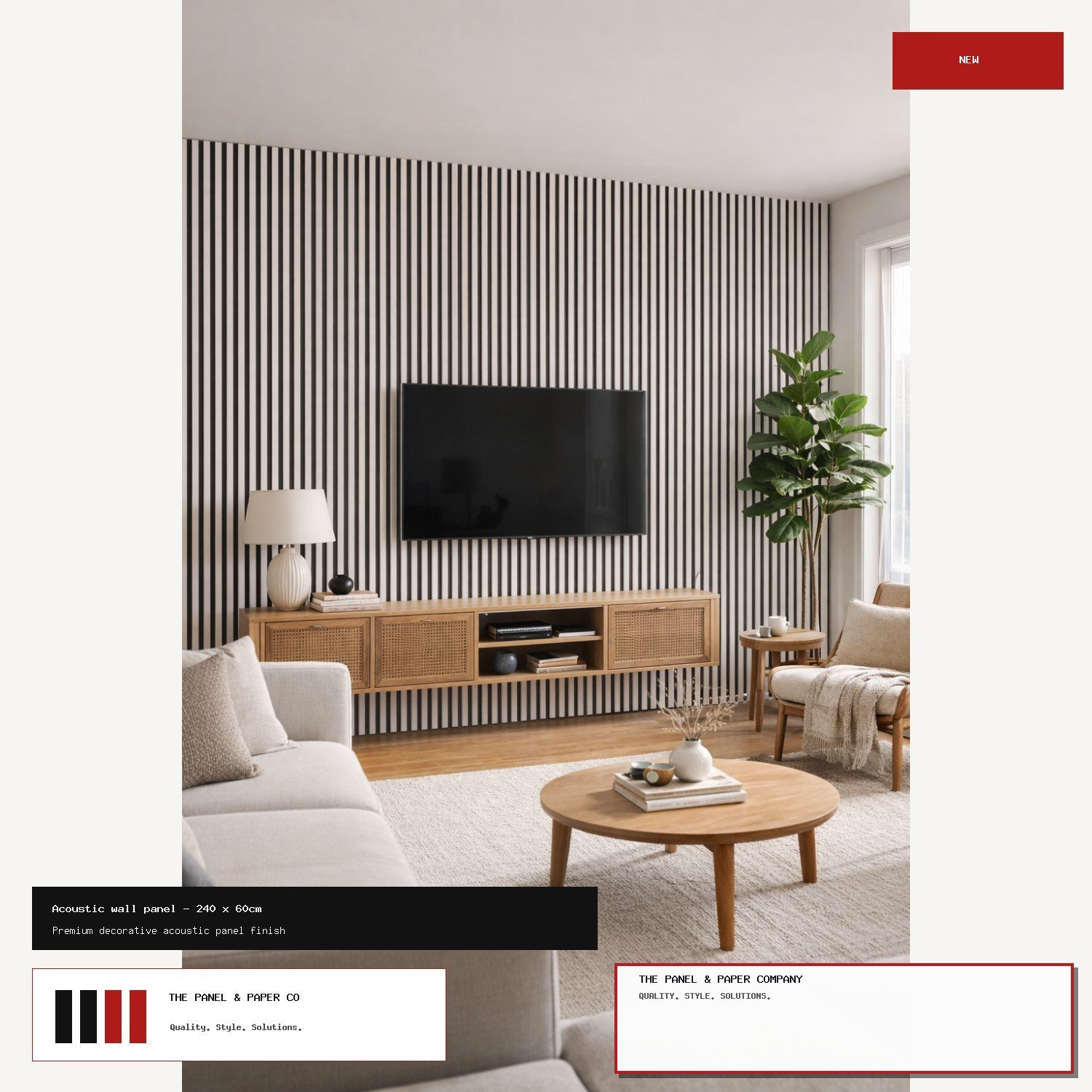
To see a full-size example, look at the White Acoustic Wall Panel, 240 x 60 cm. Check each product page for dimensions, finish and fitting details before you plan quantities. All our panels carry a one-year warranty.
A sensible buying route:
- Measure the walls you want to treat and sketch where the quiet seats are.
- Order a few samples and view them in daylight and evening light.
- Decide your coverage, spreading panels over more than one wall.
- Order, fit, then clap-test the room again.
If you are ready to start, browse the acoustic wall panels and add samples to your basket.
What panels will not fix
Be realistic about the limits so you are not disappointed:
- Noise through walls and floors. That needs mass, sealing and sometimes a rebuilt partition.
- Glazing and doors. The State Library guidance flags them as weak points. Seal gaps and consider the door itself.
- Poor zoning. A café next to the silent study room will beat any panel layout.
- Behaviour. A clear policy on calls and group work still matters. Acoustic treatment makes quiet easier, not automatic.
For public buildings, schools and universities with formal targets, a measured survey by an acoustic consultant is the right step, because the figures in BB93 and BS 8233 apply to measured rooms. For homes, community reading rooms and small commercial spaces, a careful layout with well-spread panels is usually enough to make a clear difference.
FAQ
How many dB is a library?
RNID gives 40 dB as an example of a quiet library. UK design guidance for library background noise is typically 40 to 50 dBA, with BB93 giving an upper limit of 45 dBA. Ordinary conversation is around 60 dB, which is why voices stand out so much.
Do sound absorption sheets work?
They work for echo and reverberation, because they absorb sound that would otherwise bounce back into the room. They need enough coverage, spread across walls or ceilings, to make a noticeable difference. They are not a substitute for insulation when noise passes through a wall.
What reverberation time should a library have?
UK guidance points to about one second or less. UWE’s design guide, for example, sets 0.8 seconds for study areas and 1.0 seconds for circulation and media-storage areas. These are mid-frequency measurements, so a consultant would need to measure your room to confirm.
Where should I put acoustic panels in a library?
Treat the ceiling if it is high, then the walls nearest the seating and any parallel walls facing each other. Also treat the walls around noisy zones such as a café or group tables. Spread the panels rather than clustering them in one place.
Sources
- Design Requirements for a Contemporary Library, European Acoustics Association, 2023
- Acoustics, State Library of New South Wales Public Library Services
- Acoustic properties of a room, BATOD
- Essential Design Guidelines: Good Acoustics, Designing Libraries
- How loud is too loud?, RNID
- UWE Estates and Facilities Design Guide, acoustics standards
- Studio apartment divider ideas
Recommended
- Flutter Echo Treatment: How to Find and Fix It in Your Room
- Part E Sound Insulation: What the Rules Require and How to
- Diffusion vs Absorption: Which Does Your Room Need?
- Panels Behind Your Desk: What Works and How to Fit Them
Ready to compare products? Shop flexible wood wall panels Shop premium wide slat wall panels